Land Patent ownership of Section 23 Township 2 West Range 18 North in Euchee Valley in about 1870 and surrounding patents. Note the proximity of the residence of Francis Marion (“F.M.”) Moates on the old Noah Moates patent of 1857 (blue), the T. S. Dew/ J. W. Moates farm (yellow) in section 23, and the James Marion (“J.M.”) Moates holding in the adjacent section 26. By 1890 all of the Moates families had left the valley.
A Connection to the Land
One who knows me well has remarked that I can become obsessed with the details of a historical mystery. This is true. This trait may account, in part, for my success to date in uncovering nuggets of family historical treasure. My obsession is especially acute when it comes to the place(s) where the drama of my ancestral family’s lives unfolded.
As I reckon it, indeed, to understand the whole story of our history we must answer the questions: Who? What? Where? When? How? And most significantly, Why? But where and when an event transpired is indeed essential and suggestive of answers to the other questions. The place—“the where”—a family tree is planted gets in at its root and works its way out in the branches for all the later generations even if we, the terminal buds of the family tree, are unaware of the soil from whence we sprang. I sometimes say that describing my Southern roots as “rural Alabama and woodland Florida” is redundant since much of this theater in the nineteenth century was and remains agrarian. Even though I may now live in the city, far from the woods and streams of my ancestors, a sense of the soil still pervades my spirit. Thus, I agree with Wendell Berry when he said, “The soil is the great connector of our lives, the source and destination of our lives.”
What is more, I write this post in the hope that the information that I have uncovered in my research will not be lost again to the descendants of our common Moates ancestors. Thus, I will apologize to you, dear reader, in advance for the extreme level of detail within. I hope you will find the facts and ideas provocative and inspiring. Many conjectures are as yet unproven and may exist only as theories, visions, and imaginings. I, of necessity, must leave the adding of final details to those who come after me. Hopefully, this post will assist that family historian in her research.
Nevertheless, I have found helpful the locating the property where my ancestors resided in reconstructing the story of the lives of our forebears. Indeed, the few precious times when we have identified the precise spot on the earth where they stood or walked, and when we tread that spot ourselves has imparted an emotional, almost spiritual sense of the place. Thus, I am impelled to find, if possible, any trace of the habitation of my ancestors on the land.
I have previously reported (see https://sammatteson.com/2023/06/17/hiraeth ) my adventures in exploring the Alabama home place(s) of my mother’s Moates grand- and great-grandparents, the family of patriarch Noah Moates and his faithful wife Elizabeth Harriet Pilcher Moates, both of Huguenot stock from Abbeville County, South Carolina. Noah, like the Biblical patriarch Abram (meaning “exalted father”) who abandoned Ur for lands unknown, sought out a “land flowing in milk and honey.” From my research I conclude that my Patriarchal Noah ultimately found such a place near the confluence of White and Folkes (or Folks) Creeks in the Euchee Valley of Walton County, Florida. And like Abram (aka Abraham) his family accompanied him on his Odyssey.
1843-1850 Alabama Fever Abates
On 3 Nov 1843, my great grandfather James Marion was born (sadly, out of wedlock) to Rachel Moates, near Briar Hill, Pike County, Alabama. I have examined the details of the patrimony of my mother’s granddaddy James Marion Moates (aka Miley). (See https://sammatteson.com/2020/08/30/tell-me-thy-name / and subsequent posts) His birth must have been a scandal in the small community and in near-by Pisgah Primitive Baptist Church (a log structure replaced in the early twentieth century by a quaint Neo-classical structure).
Historical marker at Pisgah Primitive Baptist Church, Pike County, Alabama on which William and Emily Miley are mentioned. Elder Miley is allegedly the natural father of James Marion Moates.
James’ alleged father, William Goodman Miley, was an important church leader (see historical plaque) and a co-founder of the church. In about 1846 Squire Miley absconded with his family to the Tampa Bay area without publically acknowledging his “natural” son—as far as can be established. There he, described as a “hardy pioneer,” started anew with his formidable wife Emily Oerntz Miley and five children as some of the first European settlers in Hillsborough County. At about this time climate records suggest that the weather in central Alabama turned bad, adversely affecting crop yields with alternating years of drought and flotd. Whatever the precise timing or pivotal reason, Noah Moates emigrated southward out of Alabama, as well, taking his daughter and “bastard” grandson with him in his entourage.
1850-1860 The Euchee Valley Calls
In 1850 Noah and his family appear in the US Census for Eucheeanna, Walton County, Florida. The family occupies three separate structures, namely #46, #47, and #49, their names appearing along with those of two deceased family members (son-in-law Shadrach Thad Cotton Æ 39 and son William Moates Æ 35) [note: Æ denotes “at the age of”] who perished in the previous year, respectively in April and February 1850, according to the census “Death Schedule.” The Euchee Valley entourage included Noah (Æ 57) and Elizabeth (Æ 55), two surviving sons (James Æ 23 and Francis Æ 13), four daughters (two unmarried: Elizabeth Æ 22, Martha Æ 17, and two other married daughters who were widowed or abandoned, namely: Mary A Moates Cotton (Æ 30), and Rachel Moates “Miley” (Æ 27) and five grandchildren (comprising the four Cotton children and my great grandfather James Marion “Miley” Moates (Æ 7). This is a total of thirteen (13) living individuals who resided in proximity on the family estate. Below is a composite of the enumeration of the 1850 Census where these Moates folk appear. This large contingent required a substantial farm for support.
Composite of 1850 US Census for Eucheeanna, Walton County, Florida with family members of Noah Moates.
Thus, in 1850 they probably squatted on land that Noah later purchased. In 1853 Noah Moates filed for and was granted in 1857 a patent for an estate of about 200 acres in Township 2 North Range 18 West with aliquots in Sections 14, 15, but principally in 23. Below is a reproduction of part of the patent.
The patent granted to Noah Moates on 1 July 1857 for SW¼ of SW¼ Section 14, SE¼ of SE¼ Section 15, W½ of NW¼ and NW¼ of SW¼ Section 23 Township 2 North Range 18 West, during the Presidency of James Buchanan.
This property is located in present-day Walton County, near DeFuniak Springs. Florida. The bulk of the land is situated between George Montgomery Road and County Highway 280 E, on the north and south respectively. Two creeks (Folkes Creek and White Creek) transect the wooded property. The earliest topographic maps of the area date to the 1930s. (See figure.) We can discern a now-abandoned public (dirt) road that ran across the property (beginning near 8823 County Highway 280 E and crossing the property at 1385 George Montgomery Road) of my informants James A******* (Æ 85) and that of the current custodians George and Linda S***** [names redacted to preserve their privacy], respectively. The George Montgomery Rd property was owned from about 2000 to 2019 by Mr. and Mrs. B**** who had purchased it from the land agents Gillman, Fox and Grant. Mrs. B reports that they have no recollection of any structures extant on the property. On the other hand, Mr. A informs me that his father, Lorendel A (1911-1986) indicated the carriageway survived from “horse and buggy days.” He recounted how that the women would bring their wash down to the creek crossing to clean their clothes in the clear creek water of Folkes (or Folks) Creek. The carriageway crossed the creek at either a ford or a bridge that we estimate was located at approximately latitude and longitude (30.65491° N, -86.01999° W) and approximately 100 yards northwest (up Folkes Creek) from the confluence of Folkes and White Creek.
In the image below, we see the 1933 topographic map with an overlay of the Moates and Dew-Moates patents as well as the roads and points of interest, for example extant houses in 1935 and road/creek crossings.
1935 Topographic map of sections 22 and 23 showing extant roads (George Montgomery Rd and County Highway 280E labeled) with the 1857 Patent of Noah Moates overlaid and identified as Noah Moates Farm, occupied by the larger Moates clan from 1850 to about 1874 when it was sold to Mr. and Mrs. Lowe, neighbors who later sold it to William Crawford in 1885. About a mile to the east in Section 23, as we have indicated, we find the location of the Dew/ J.W. Moates farm that Rev T. S. Dew purchased from Samuel Campbell in 1859 and subsequently sold to James W. Moates in 1875, who had lived there from about 1870 when Rev Dew moved to Washington County following the death of his beloved wife, Elizabeth, until 1884 when James sold it and moved to the nearby community of Argyle.
It is difficult, if not impossible, to know precisely the location of our ancestors’ dwellings, since the landscape has been remodeled repeatedly by nature and human use over the centuries. Nevertheless, we can discern traces that suggest where the structures might have been. It seems reasonable that the farm houses would have lain close to the road. Furthermore, succeeding buildings may have been constructed near or within the same footprint of the earlier structures. Below are aerial photographs from the mid-twentieth century (extreme left and right) sandwiching a recent image (in the center). Five regions of interest (ROI) are marked with yellow circles in each image where potential structures or their ruins appear. These ROI deserve further investigation to establish the “ground truth.” [Unfortunately, the current owners of the site have not, as of this writing, granted permission for us to trespass on their property.]
Envisioning The “Cracker Farm House”
While there is no discernible structure still standing from the antebellum period on the Moates Folkes Creek-White Creek Farm, there might be ruins from that period, but, nevertheless, no building survives. It is left to our imagination to reconstruct what residence the Moates family might have looked like. We have in my family photo archives three images that are a help.
Originally, in 1850 Noah Moates must have constructed simple log cabins to shelter his family. Such rude structures may have sufficed for a few years but by a decade later a more substantial farm house surely would have been built.
Subsequently, Patriarch Noah Moates would have built a typical “cracker” style home like that shown below owned by Malachai and Sarah Dew Murphy (she the eldest daughter of Rev. Thomas Dew), shown standing in front of their home near the turn of the 19th century in Altha, Florida. Such dwellings typically consist of two rooms under a single shingle roof with an open “dog trot” breeze way between. Each of the two “pens” would have a fireplace for warmth and cooking. The whole of the structure would be built on “pins” of stacked stone or brick.
Malachai and Sarah Murphy standing in front of their typical “Florida Cracker” home in Altha, Florida in bout 1900.
This early design persisted into the late 19th century. As illustrated by the 1894 image of the homestead of Rev. Thomas S. Dew in what became Houston County, Alabama.
The T. S. Dew-J. M. Moates Family in front of the homestead of Rev Dew near Dothan, Alabama about 1894. The substantial home is a further evolution of the basic antebellum farmhouse Florida design.
Similarly, we see the common features in the home of James Marion Moates in Dothan, Alabama in a few years later. The individuals in the photo below are James Marion Moates, and wife Ruth Ann Dew Moates, my great grandparents bookending daughter Geneva (or Genella) Moates, my mother’s Aunt.
James M. and Ruth Ann Dew Moates with daughter Genella “Navy” in front of their turn-of-the-century Houston County farmhouse that continues the architectural conventions of their Florida Cracker Roots.
But is there any evidence of such structures on the land? A tantalizing aerial photograph from the mid-twentieth century below shows timber land had been harvested by clear cutting. It appears that there are four (or five) structures or their ruins on the acreage.
The Noah Moates Folkes Creek-White Creek family farm was occupied in 1860 with many of the same people who had immigrated to the Euchee Valley a decade before. This image suggests the possible existence of the ruins of historic dwellings. But without actual close examination in person the “ground truth” must elude us. What is clear is that the Noah Moates family immigrated to this farm (The Folkes Creek-White Creek Farm) in about 1850 and resided there for over twenty years. In 1860, on the cusp of the Civil War, the Moates clan on the farm consisted of Grandpa and Ma Noah and Elizabeth, daughter Rache[l] Son James W, nephew Jesse, Rachel’s son James Moates “Junior,” and Noah’s recently divorced brother Jonathan (Jesse’s father). Son Francis Marion Moates lived elsewhere in the county a mile or two away with his new bride, Polly Peel Moates.
Soon after the beginning of hostilities in 1861 Jonathan (Æ 52) , his son Jesse (Æ 23), grandson James Marion (Æ 17), sons James W (Æ 35) and Francis Marion (Æ 24) Moates all reported for duty in various units of the Confederate Army, leaving Papa Noah (Æ 68) and the women to manage the farm in their absence.
The War Years and Postbellum
By 1864, Jonathan was deceased, dying in the military hospital at Chattanooga. Not long afterwards Noah succumb, as well and was—we suspect—laid to rest in a poorly marked grave in the cemetery adjacent to the Euchee Valley Presbyterian Church. (See https://sammatteson.com/2024/12/ ) Grandma Moates and her daughter Rachel and her sisters persevered alone without the men folk, even enduring a Union raid in September of 1864. It must have been a desperate time afterward since all the available food and livestock had been confiscated by the marauding Yankees.
Following the end of hostilities, the brothers James W., Francis Marion, and their nephew James Marion Moates returned to the Euchee Valley patrimony. Francis returned to the waiting arms of his wife, Mary Ann “Polly” Peel (born in Burke County, Georgia niece to Thomas’ wife Aunt Elizabeth Atkinson Dew, her mother’s sister). Francis had wed Polly in 1859 before enlisting, before fighting in Tennessee, before enduring capture and imprisonment, and before securing a pardon to serve in the union army fighting Indians in the Nebraska Territory. Soon after the war Sgt. James W. married neighbor Flora Ann Campbell on 11 Oct 1866; while Pvt. James Marion, my ancestor, married Rev Thomas Dew’s daughter, Ruth Ann Dew, the girl next door, on 7 Feb 1867. In the 1870 census we find Francis and Polly living on the Folkes/White Creek farm, with James W. and Flora residing a mile east on the plantation owned by Rev. Thomas Dew, who was recently widowed and who had removed with his last surviving unmarried daughter Mary Ann Dew to Hickory Hill (also known as Orange Hill) in Washington County to pastor the Union Baptist Church. James W. and wife Flora, who would soon purchase the property in 1875, we find in the 1870 census living with their son Noah Daniel Moates and mother Elizabeth Moates (Æ 73). Nearby Section 23, his nephew James Marion Moates oversaw a household that included his young bride Ruth (Dew) and his mother Rachel (recently widowed by the Mr. Gleason). Circumstantial evidence suggests that not long before the census, Ruth had given birth to a daughter Martha Ann Moates, who survived less than a year. Martha apparently had been named for her aunt Martha Ann Dew (Rev Dew’s daughter and Ruth Dew Moates’ sister) who was recently deceased. Theirs was a family of sorrows and acquainted with grief.
Thus, the Moates and Dew clans, as well as the Moates and Campbell families, were joined in marriage in multiple liaisons. Where one lived strongly influenced whom one married. The Moates, Dew, Pell, and Campbell family farms all clustered about Section 23. Proximity led to affection; affection to marriage; marriage to family and thus, to us. In at least this subtle way, the “where” influenced the who of us and all our ancestors’ descendants.
By about 1880, much of the older generation was gone: both Noah and Elizabeth Moates and their daughter Rachel were deceased, as was Elizabeth Dew. Only Rev. Dew from among my 2x great grandparents survived; he had, however, also moved on to Washington County where he was joined by two of his daughters—Mary Ann and Ruth Ann with her husband, the Reverend’s son-in-law James Marion Moates. The part of the Moates family that remained in the Euchee Valley after the mid-1870s were the families of Francis Marion and James W. Moates and daughters Mrss. Cotton, Hutto, and Lassiter.
Aerial photo (20th century) of aliquot of Folkes/White Creek Farm in section 23, 3 N 18 W. Note the two features we identify as sawdust piles located on Folkes and White Creeks respectively. These discard piles may lie atop earlier piles, since the area would have been cleared.
The Suspected Moates Mill
As the decades after the Civil War rolled on, the veterans attempted to regain their financial footing. I am persuaded that the brothers Moates operated a steam saw mill/grist mill on the Moates family farm. The source of this notion is the proximity of a millwright (Solomon Sikes) living next door to Francis in 1870 on the Folkes/White Creek farm. In the same census James’ occupation is listed as “miller.” Moreover, Francis later, after he immigrated to St. Andrews in Washington County in about 1890 until his death, operated a saw mill on the banks of St Andrews Bay. In aerial photographs from the early twentieth century we observe traces in the image of sawdust piles near where the carriageway crossed Folkes Creek. The prospect of Reconstruction-era relics of the mill lying buried in the sand on the banks of the creek is tantalizing. However, only a thorough survey, perhaps using a metal detector can confirm the conjecture. We can get an idea of the nature of the putative mill by examination of contemporary mills. Francis built a sawmill on the backbay of St. Andrews Bay that appeared on a Sanborn Fire Insurance map.
The location of the F. M. Moates sawmill in St, Andrews, Florida.
By 1890, the hypothetical Moates Brothers Mill must have ceased operation. We can confidently assert this as fact since the property was in the possession of a neighbor by then; it was sold to Mr. and Mrs. Lowe, who later sold it to William Crawford in 1885. Most real estate documents from before 1885 were lost in a courthouse fire that year. We can imagine what the mill might have looked like from a photo of a mill on Wrights Creek near Caryville, Washington County that is associated with Seymore B. Sikes the two-year-old child of the millwright neighbor of Francis Moates. (See Photo)
Photo of (steam) grist mill on Wrights’ Creek near Caryville, Florida associated with Seymore B. Sikes, child neighbor of Francis Moates in 1870. This exemplar suggests the design of what a steam mill building might be like.We can get an idea of the configuration of such a mill from other examples such as the Rhodes Mill a contemporary mill; from essay by Joseph Elmer Rhodes, Jr. https://rhodesmill.org/jer-sawmilling.html.
Typical of such is a structure built on pilings over the waters’ edge, often with a sled ramp for hauling logs up to the saw head. Often the mill is little more than an open shed to protect the steam engine and saw head from the weather. A grist mill typically was enclosed to preserve the cleanliness of the meal. We should look critically for any trace of the foundation of such a mill or discarded parts of the mill machinery to establish the mill site. I have included an advertisement for a used combination stem saw and grist mill to suggest the commonality of such technology.
A contemporary advertisement for a steam sawmill/grist mill in Columbus< Georgia offered by J. H. Sikes (no known relation to Solomon Sikes).
By about 1880 Francis Marion and James Marion had quit the county and joined Rev Dew in Washington County, Florida. Francis ultimately was a pioneer and entrepreneur of St. Andrews. Meanwhile, James W and wife Flora sold their interest in the Dew-Moates farm and moved a few miles north to a farm in Argyle. The tombstones of Noah and Elizabeth Moats/Moates of red sandstone began to disintegrate in the Euchee Valley Cemetery. The name “Moates” was lost to the communal memory. An echo of their name, albeit distorted, appears in the History of Walton County by John L. McKinnon (1911 Byrd, Atlanta, Ga). On page 42 we find in the list of the pioneer families the name “Oates.” This family name does not appear in any census before the twentieth century and is likely a corruption of the name “Moates.” The figure below is a composite of the title page and page 42 with the family Moates highlighted.
Title page of History of Walton County by John L. McKinnon, 1911 and page 42 on which we find the family (mistakenly) identified as “Oates” as pioneers of the Euchee Valley. The name is a corruption of the family name “Moates” in our view.
The error may have arisen because by the turn of the century the Moates clan had moved on from the Euchee Valley and the only record of their presence was the poorly marked graves of Noah and Elizabeth Moates in the Euchee Valley Cemetery. It would be a tragedy for all vestige of our family’s long residence in this place to be erased and forgotten. They were here; they persevered; they mattered. I resolve that though they are gone, they will not be forgotten in this place. All that remains of Harriet Elizabeth Moates tombstone is [M]oat H.
The Significance of Where
Thus, we can confirm that Township 2 North Range 18 West, Section 23, Walton County, Florida was the nexus of our Moates-Dew family’s activities from about 1850 to 1885. Although in later years, they relocated to southeastern Alabama and other counties in Florida, here the Euchee Valley cradled my great grandparents’ development that shaped us in the centuries to come. And in each generation afterward we inherited—knowingly or unknowingly—a legacy of sandy soil between our toes washed clean in the clear spring-fed creek water of our patrimony.
The historic Euchee Valley Presbyterian Church that has been active in one building or another since the 1840s. It was a familiar sight to the Dew and Moates families, lying as it does, across the present-day County Highway 183 S near its intersection with Count Highway 280 E, in Walton County south of De Funiak Springs, Florida.
Probably a Genealogist
“Probably a genealogist,” Mrs. Bailey remarked to her husband when they saw me photographing tombstones in the Euchee Valley Cemetery that Sunday afternoon in April 2024. They had come to visit the graves of his departed aunt and uncle when we greeted each other. I explained that I was looking for the final resting place of my ancestors, the Dews and the Moates family who had lived in the 1800s at the now vanished community of Eucheeanna, Walton County, Florida.
After a diligence search, I think that I at last have found the lost tombs. The difficulty arises, unfortunately, from the fact that only one legible grave stone remains today, that of my great-grand aunt Mary Ann Dew Sowell, listed on the cemetery catalog as plot #646. It seems, at first, to be a puzzle why she was buried here when much of her family lies in Dothan, Alabama, the city of residence of her and much of the Dew family after about 1890. The answer, I suspect, is the key to the identity of her companions in repose in the cemetery that lies outside of De Funiak Springs, Florida. The on-line numbering of the plots was helpful in finding the area of the relatively large cemetery. By “triangulating” from various surviving tombstones we were able to pinpoint the plots of interest. In fact, I doubt I would have found her grave without it. The area where Aunt Mary is (and much of the rest of her family probably are interred) appears below in the aerial photograph of the of the area graveyard lying within the white circle about fifty feet north of the service road and east of the row labelled “I. “
An aerial photograph of the Euchee Valley Cemetery and Presbyterian Church. The Dew-Moates area is located within the white circle near a crepe myrtle tree.
Mary Ann Dew Sowell, Rev. Dew’s Daughter
I found Mary Ann Dew Sowell’s grave after an arduous search. Entering through the service gate south of the white frame building of the Euchee Valley Presbyterian Church (see the aerial above and the photo below) I proceeded about half-way back toward the rear eastern side of the sacred grounds. Looking left, we can see a distinctive cross-shaped marker of the Irvine plot. This became a prominent landmark for finding the plots.
The location of the grave of Mary Ann Dew Sowell (left circle and arrow) relative to Irvine Family cross-shaped memorial (smaller circle on right). The image is looking eastward from the vantage point of the entrance of the service road into Euchee Valley Cemetery.
The cemetery is hard by the venerable Euchee Valley Presbyterian Church (featured image above) that was founded in 1827. Incidentally, Rev. Samuel D. Campbell of Virginia purchased a large tract of land across the road (currently County Highway 183 S) while he briefly served the church as pastor. After he had moved back to Virginia, his interest in the property on the frontier waned. Subsequently, in December 1859, he sold the 279 & 79/100 acre property to my 2x great grandfather, the Baptist Preacher Rev. Thomas Spenser Dew, Mary’s father for $450. A little over fifteen years later (17 April 1875) he would deed the tract to my 2x great uncle James W. Moates for the sum of $600, who farmed it until the later 1890s. Uncle James was the namesake of his nephew and my great grandfather, James Marion Moates. Apparently Uncle Jim had been living on the land, farming it, and working as a miller in collaboration with his brother Francis Marion Moates (for whom my mother’s grandfather was also named) since about 1870 when Rev. Dew had moved to Washington County to pastor the Union Baptist Church in Orange Hill. (See previous post).
Tombstone of Mary Ann Dew Sowell (Oct 29, 1951 – 26 May 1937) in Euchee Valley Cemetery. Image from Find-a-grave.com.
The Mystery of Neighboring Unmarked Graves
In the 1860 census Rev Dew appears with his four daughters and wife Elizabeth with a single unnamed enslaved man servant, aged 19, who had been with the family since at least 1850 when they lived in Ozark, Alabama. But by 1870 Rev. Dew was widowed and had moved to Washington County, forty miles east. He was accompanied by his youngest daughter Mary Ann, who found a husband in Ransom Sowell in the Orange Hill Community. Meanwhile, her sisters, the war widow Sarah Ann Dew McSween was living in Holmes County with her children and mother-in-law, and Ruth Ann Dew Moates (my great grandmother) who lived with her husband James Marion and mother-in-law Rachel Moates Miley Gleason on a farm adjacent to the Campbell-Dew-Moates property in a community later was known as “Campbelltown.” In subsequent decades Sarah Ann married Elder Malachi Murphy and moved to Altha, Calhoun County, Florida, while Ruth Ann moved to Orange Hill and subsequently to Dothan, Alabama where they lived out the remainder of their lives and where they are buried.
The relative orientation of the grave of Mary Ann Dew Sowell and the other hypothetically identified graves.
An examination of the layout of the plots adjacent to Mary’s resting place suggests the potential identity of the interred. Immediately to the north of Mary’s grave is an unidentified grave marked with nineteenth century era fired bricks. I suspect that this is the grave of Elizabeth Atkinson Dew, Mary’s mother. This idea is very plausible and persuasive. The next plot contains the unidentified grave of a child, marked with both similar bricks and a small granite, lichen-covered standing slab. I believe this is the final resting place of little Martha Ann Moates, the daughter of James and Ruth Ann Moates, who died on 24 March 1870 according to a family Bible entry. At about the same time (before Dec 1869) her Aunt Martha Ann Dew (and her namesake) disappeared from the public records, presumably dying before 1870. In the photograph below we see an overhead view of the three graves.
The hypothetical assignment of the identified graves adjacent to that of Mary Ann Dew Sowell.
The graves are clustered around a crepe myrtle tree, a traditional symbol of mourning and memorial. Other grave sites nestled in among the trunks of the flowering tree may be that of Martha Ann Moates’ other grandmother Rachel Moates Miley Gleason, who we infer died about 1872. Two other more speculative assignments are that of Noah Moates’ brother Jonathan Moates who died in the Confederate Army hospital in Georgia and whose corpse was claimed by his brother in 1863, and that of William Moates, Patriarch Noah’s son. who died shortly after the Moates family moved to the Euchee Valley in about 1849. The evidence for these conjectures is their proximity to each other, as well as the similarity in the marker: a simple granite slab. The extensive lichen overgrowth on the stones might be obscuring an engraving, although the growth may have eroded, over the century and a half, since its inscription. Clearly, these graves date from the 19th century—with the exception of Mary Ann’s final resting place. At the end of the century all of the surviving Moates-Dew family had relocated farther east in Florida and north into the wire grass region of Alabama where my mother’s people resided and she was reared.
The Moates Matriarch and Patriarch Elizabeth Harriet and Noah Moates
I had come to Walton County in hope of finding the graves of the patriarchs Noah and Elizabeth Harriet Pilcher Moates on the family farm a mile down the road. I found no evidence of a family graveyard on the White Creek Farm. I was pleased later to find the potential graves of their family as I have described. Then observing the graves that surrounded those that we have encountered above, I chanced upon two red sandstone markers. One was completely degrade but the one on the left (facing eastward) bore a partial inscription that froze me in mid-step. The sun was at just the right elevation to cause the surviving engraving to stand out in high contrast. I discerned the letters [ ] OAT H. Could this be the tombstone of Elizabeth Harriet Moat/Moates? I am persuaded that, indeed, this is the case. In the photograph I have superimposed my probably reconstruction of the inscription on the image of the stone. The “O” with its idiosyncratic central dot is unmistakable. The date of death appears to be Aug 1870 (a date unquestionably ending in zero). This correlates well with Dame Moates appearance (as “Elizabeth Wilhout age 73” as we explored in an earlier blog) in the 1870 census taken the 25th Day of August that year. On her right—the traditional position of the male spouse—is a much degraded sandstone monument that I infer marks the grave of Noah Moates, my 3x great grandfather, who perished on 2 Feb 1864 according to unconfirmed genealogical information that I found on ancestry.com.
Highly deteriorated red sandstone marker that appears to read [M]oat H, Aug 1870 that we identify as the headstone of Elizabeth Harriet Moates.
Deteriorated red sandstone monument assigned to Noah Moates father of Rachel Moates “Miley” Gleason, James W. Moates, and Francis Marion Moates, grandfather of James Marion Moates, the 2x grandfather of the author.
Gone But Not Forgotten
Thus, I came away from the cemetery that day with a partial sense of satisfaction that I had located—with as much certainty as is common in such matters—the final resting place of several of my forebears. We may ask, “What difference does it make?” In reply, I declare that their final resting place helps us remember them and recall their story. And as the frequent epitaph declares they are “Gone but not forgotten.”
Indeed, we will remember them and say their names. I once heard Mandy Patinkin, distinguished actor, remark during an interview with Dr. Henry Louis Gates, Jr. that while he was performing the musical Carousel Oscar Hammerstein encouraged him saying “As long as there is one person on earth who remembers you, it is not over.” I see it as my job as a genealogist and historian to remember and help you remember. It is therefore “Not Over.”
In 1869—not long after his beloved wife of over 30 years, Elizabeth Atkinson Dew had died—Rev. Thomas Spenser Dew left his farm and ministry in Eucheeanna in Walton County, Florida that was situated across the road from the Euchee Valley Presbyterian Church to move to the community of Orange Hill, Washington County, formerly known as “Hickory Hill.”
The migration of Rev. Thomas S. Dew and daughter Mary Ann Dew from Eucheeanna to Orange Hill (formerly known as Hickory Hill) Florida in about 1869, traced on an 1857 vintage map.
In the US Census of Aug 1870, James W. Moates (mis-transcribed as James “Wilhout”) resided with wife Flora, widowed mother Elizabeth, and son Daniel Noah, on the Dew-Campbell property that Rev Dew ultimately sold to him in 1875. In the months before his relocation, grief descended upon the Dew household: Martha Ann, one of his four daughters, also died and was laid to rest near her mother in Euchee Valley Cemetery. In just a few months, Martha Ann Moates, his granddaughter (the child of my great grandparents James Marion Moates and Ruth Ann Dew Moates) joined them. Daughter Mary Ann Dew, at age 20 in 1870, kept house for the Reverend, while daughter Ruth Ann Dew Moates with husband James Marion and Mother-in-law Rachel Moates Gleason remained in Eucheeanna on a holding adjacent to the Dew-Campbell farm. Meanwhile, daughter Sarah Ann Dew McSween—widow of Robert McSween who was killed in action in Mississippi—lived in Holmes County with her two girls and Mother-in-law.
Photograph from County Highway 280 E looking into the 19th century holding of Rev. Thomas Dew (owner 1860-1875) and James W. Moates (owner 1875-1884).
Section 23 and adjacent aliquots of land passed into the possession of several Moates Family members. In fact, family history recounts how the gentle rise in the landscape the buggy driver encountered as he approached the cemetery from the town center to the west was informally called “Moates’ Hill.” Below is a schematic of the property patents in the early post-war days.
Schematic map of many known holdings in the Euchee Valley in 1870. Pastor Dew purchased about 240 acres in 1860 from Rev. Samuel Campbell, who pastored the Presbyterian Church nearby for about a year before returning to his native Virginia.
Thus, in 1869 Pastor Dew moved 30 miles farther east, less than a decade after he had come from Ozark, Alabama to the Euchee Valley with his wife, four daughters and an enslaved man servant to assist the church planter Rev. Lester R. Sims in evangelizing and serving the sinners and saints of western Florida in the Euchee Valley. The congregation he came east to lead in Washington County was called “Union Baptist Church.” Such a designation suggests that the church shared space with another church, such as the Methodists. This arrangement was common on the frontier. He appears in the minutes of the West Florida Baptist Association for that year as its pastor, while we can infer from a note that the congregation of the Orange Hill Baptist Church had dissolved. (See image) Subsequently, in later WFBA minutes Rev. Dew appears as pastor of the (reconstituted) Orange Hill Baptist Church.
The minutes of the 1869 meeting of the West Florida Baptist Association (WFBC) which lists Thomas S. Dew as pastor of the Union Baptist Church. Image Source: Florida Memories; https://floridabaptisthistory.org/association-minutes-2/
Both in the oral history of the Orange Hill Baptist Church documented by WPA historians in 1936 and in the church history of the Orange Hill United Methodist Church (OHUMC) we find that the first church house was a log structure located south of the Orange Hill Academy. The Academy was held in high esteem as the first Baptist-supported educational institution founded in Florida. The Baptist congregation met in the Academy building but later moved into the log structure shared by the two congregations, the Baptists and the Methodists—at least until it burned to the ground. Following the conflagration, the Baptists relocated farther south off the hill while the Methodists rebuilt the church on the same spot. The reconstructed (Methodist) church house is shown in the photo. (The photo was obtained from the archives of OHUMC.) Ultimately, the Methodist congregation built a modern church house on the site of the defunct Academy. (See photo.)
Church house built by Orange Hill Methodist Church on the site of the original log church shared with Union/ Orange Hill Baptist Church after the original structure burned. Note the substantial stone steps leading to the front door of the church house. Image Source: OHMC archives. United Methodist Church 1167 Sunday Road, Chipley, FL, 32428. The cemetery is visible to the right of the church house. (Photo taken by S. Matteson 14 April 2024)
On 14 April 2024, I visited the site of Orange Hill United Methodist Church on Sunday Road, south of Chipley, Florida. Based on information gleaned from early aerial photographs of the summit of Orange Hill, I drove to the Orange Hill Cemetery on Sunday Rd and began my archaeological survey. I explored the fields across the road from the cemetery and came upon a relic of the old church house. In aerial photographs from the mid-twentieth century the original church house site is clearly visible. I stumbled upon the chiseled stone steps that led to the sanctuary.
Aerial Photograph captured 1966. Source: Historical Aerial Photos NETRONLINE https://www.historicaerials.comThe surviving stone steps to the sanctuary built by congregation of the Orange Hill Methodist Church that replaced the original log structure. Source: Sam Matteson 14 April 2024.
While I was examining the remnant of the meeting house I glanced down to find a solitary charred piece of wood lying on the surface of the space that lay under the razed and removed clapboard church. Could this be a relic from the original log cabin? It is a definite possibility. I stepped to a place a few yards opposite the entrance and recalled my Great-great grandfather Rev Thomas Spencer Dew, who may have stood in that spot about 150 years before (1869-74) and proclaimed the gospel to the good people of Orange Hill.
A charred piece of wood found at the putative location of the original shared meeting house of the Orange Hill Methodist Church and the Union/Orange Hill (reconstituted) Baptist Church in the 1870s. Source: Sam Matteson 14 April 2024.
Moates-Dew Family oral history reports that the Reverend was a prophetic and powerful preacher who proclaimed the gospel until the year he died at age 89. As I clutched that charred wood in my hand, I felt a renewed connection to and appreciation of my long-departed ancestor on that Sunday afternoon that transcended dry DNA data and genealogical analysis.
Rev. Thomas Spencer Dew (age about 86) holding his large Bible in about 1894 in Dothan, Alabama.
In this present age we are a rootless generation. On average, Americans change residence 11.7 times in their lives. [Source: https://www.steinwaymovers.com/industry-insights/ ] This statistic seems very plausible to me, since in my own childhood my parents relocated six times before I left home, and subsequently, I lived as a nomad myself—moving to sixteen “permanent” residences after founding my own nuclear family—a fact of which I have been reminded by my children, who themselves have itchy feet, as well. So it is not remarkable that I share with many of my contemporaries an inchoate longing for an old home place, a Heimat, lost. Recently, I came across a word for this emotion—hiraeth. This word is a unique gift of the Welsh culture, but is a universal experience, I believe. And having a word for a nebulous sensation somehow seems to give us a handle to grapple with it. I am persuaded that from time to time everybody experiences morriño (Galacian Spanish dialect for a longing for a homeland), or if we were Portuguese we might call it suadade, or even anemoia, the longing for an unknown home or that special homesickness for one’s ancestral home the Germans call Heimatweh.
Where to look for a home?
Whatever word we attach to this feeling, my genealogical research has raised the hope of uncovering my patrimonial estate or a homeplace (a Heimat?) that could be the nexus of my hiraeth. But along which branch of the family should I search? I was closest in distance and in affection to my maternal grandparents, Noah Theodore Webster Moates (1889-1972) and Katie Roberta “Bertie” Holland Moates (1888-1966). I learned in studying them that my grandfather was named for his great grandfather Noah Moates (1793-1864). My Pa died never knowing his grandmother’s father. Noah the Elder appears in the records of Montgomery County, Alabama in 1826 as a Justice of the Peace, barely six years after it became a state. His honor was enumerated in the 1830 Census for Montgomery County, Alabama, as well. In the next two decades his name resurfaces in the company of kinsmen who also emigrated from 96 District of South Carolina and were of French Huguenot stock. Noah (1793) as I often identify him, was the grandson of Jonathan Silas Motes, we believe. These family members of unestablished relation who also pioneered Alabama include Carey Motes or Moates, William (or William C) Motes, Elizabeth, Elihu, John, and John T. Motes, Moats, or Moates (a father-son pair we suspect.) Other relatives flooded into south central Alabama at about the same time, notably the brothers Morris and Dendy Motes. The name appears in various forms, as the orthography was unsettled in the 18th and 19th centuries. Historians suggest that the original form was Delamotte or a variant thereof. Nevertheless, in 1833 a clerk entered the purchase of a parcel of land that also appears in a Land Patent that is clearly Noah (1793). We can know precisely where the property was located because of the PLSS, the Public Land Survey System established in the US initially by the Land Ordinance of 1785. [Source: https://en.wikipedia.org/wiki/Land_Ordinance_ooudaef_1785 ] The key features of this system are the descriptors township, range, and section. Each township is—usually—a square, six miles by six miles in extent with each square mile comprising a section of land. Thus the sections each consist of approximately 640 acres. The PLSS was the brainchild of Thomas Jefferson, who proposed the “Rectangular Land System” that was enacted into law as the Land Ordinance of 1785. [Source: https://mlrs.blm.gov/s/article/PLSS-Information ], barely eight years before Noah (1793) was born.
A Note on Locating Public Lands
In the PLSS, key baselines were defined at various latitudes. In south Alabama the principal baseline aligns with the border with Florida. Thus, the southern edge of township 13N lies 78 (13×6) miles north of the Florida-Alabama line. Likewise, meridians running north–south were also defined, such as the one passing through St. Stephens, Alabama from which ranges were numbered east and west in six mile increments. Thus, range 20E lies 120 miles east of the St. Stephens meridian. Below is a map (courtesy of Wikipedia) of the lands subject to the PLSS.
Map of PLSS (Public Land Survey System) regions with baselines and medians. Source: Wikipedia.comDetail from previous map showing Alabama-Florida baseline and St. Stephens Meridian.
The public land was offered for sale by the Federal government (after having dispossessed the indigenous peoples who had collectively stewarded it for millennia). The 6×6 mile townships (containing 36 square miles) were subdivided into 36 sections of approximately 1 square mile (or 640 acres), each numbered in a consistent serpentine or boustrophedon (as the ox plows) pattern. Beginning in the northeast corner the sections are numbered consecutively first westward then eastward, alternating directions as shown in the illustration below. Section 6 is highlighted for special consideration.
Layout of sections in a township that is identified by township number and range number. On the right section 6 that is highlighted in the township map. Quarter SW (Southwest) of section 6, is outlined in black. The eastern half of the quarter section SW is highlighted in blue.
Such holdings were frequently too large an investment for the small farmer, so the sections were subsequently further subdivided into quarters, designated NE (northeast), NW (northwest), SE (southeast) and SW (southwest), each comprising 160 acres. Further subdivision was designed by halving (80 acres) or quartering (40 acres) the quarter section as E½ SW¼ (or ESW) as illustrated in the enlargement. Thus, ESW 13N 20E 6, means eastern half of section 6, township 13 north and range 20 east containing 80 acres. These PLSS designations can be correlated to modern property lines using various on-line resources.
Eighty Acres of “Virgin” Alabama Land
The choice of our example was not arbitrary. Indeed, in the land book from the 19th century we can see the land transactions that included Noah Moates. Notice the entry 3/4 down the page.
The page in original the land book for section 6 Township 13 [north] Range 20 [east] showing the transaction in which Noah Moates purchases the Eastern half of the Southwest quarter.
A close examination of the image reveals that in 1819, at the dawn of the statehood of Alabama one Carey Motes of Abbeville, South Carolina purchased the SW quarter of section 6 Township 13 [N] and Range 20 [E]. Subsequently, Noah Moates purchased the aliquot (a partial section) E½SW¼ of that quarter on 16 September 1831. The price was $1.25 per acre. Thus, he paid $105.40, a sizeable sum in 1831. The land was patented in 1838. A patent functioned as an official deed of ownership.
A later copy confirms that Noah not only purchased the land, but it also reveals his neighbors to the east were his kinsmen William Chesley and John T. Moates (aka Motes or Moats) with neighbors to the north and west to be Messrs. Armstrong Mitchell, Swann, and Massingill.
Land book summary page listing Noah Moates and his neighbors.
We believe that William C. Moates was Noah’s brother while John T. was his uncle, or cousin. Together the South Carolina immigrants formed an enclave, by the late 1830s, having bought up a patchwork of land parcels.
A schematic of the ownership of the aliquots (parcels) surrounding the Moates enclave that was formed by the patchwork of half- and quarter-quarter sections owned by the Moates “boys.”
Below is a twentieth century topographic map of section 6, with the aliquots for Noah (1793) and his brother William Chesley Moates indicated.
A 1971 topographic map with the property lines indicated. The map indicates roads and houses that correspond to those seen in the aerial photographs.Corresponding aerial photograph in which we can observe the collection of buildings, circled in red.
Above is an overlay of the Noah Moates (1831) aliquot and the William C. Motes (1827) aliquot on a 1977 aerial photograph. We can discern houses (circled) and cabins that are made more visible in enlargement (below).
A enlargement of the area where the structures appear on the Little Sandy Creek farm,
The Little Sandy Creek Farm (E ½ SW ¼ Section 6 Township 13 N Range 20 E)
Close examination places the GPS coordinates of the big house at 32.13193, -86.09279. There appears to be a well a few yards west of the Big House.
We can confirm that it is likely that Noah Moates (1793) resided on this land, dubbed the “Little Sandy Creek Farm,” before the census of 1830. He probably leased or rented the property from his relative Carey Motes in the 1820s. He was residing here in 1830 when the census was made. This we can infer by noting the order and subsequently location of the individuals in the census list. If we plot the location of all of the neighbors who appear in the census in order we see that the census taker meandered from farmhouse to farmhouse. Apparently, the enumerator missed the Noah Moates family on his first pass finding Chesley and John T at home but revisited the Little Sandy Creek Farm successfully a second time. Yellow designates the estimated trek before visiting the Noah Moates family (white circle) and the red arrows the path of the enumerator in successive visits to other farmsteads.
The approximate path taken by the enumerator of the Montgomery County in visiting the farmsteads of the families listed in the 1830 Census.
Noah Moates does not appear by name in any known census before 1830 and in 1840 appears in the census for Pike County while his son James W. Moates appears in Montgomery County, adjacent to his Uncle William C. Moates’ property. By 1850 Noah and family had moved to Eucheeanna, Florida, appearing in the census there. We can conclude that, most likely, Noah Moates owned and/or resided on the Little Sandy Creek farm from before 1823 when daughter Rachel was born in Alabama to about 1849 when they moved south. Thus, this is the first documented “homeplace” of the Noah Moates clan, although they occupied the site for only about 20 to 25 years before moving on. Therefore, is this not the “Ole Homeplace” of our family?
The Ole Homeplace Today
But what became of the Ole Homeplace and what remains of the place today? We can trace the history of the ownership of this tract of land down through the nearly two centuries by searching the property tax books and reading the newspapers for real estate sales. Sometime after 1850 the Little Sandy Creek (LSC) farm was sold to Mr. Martin Willis (1825-1866). We infer this fact from Elizabeth Moates’ (William’s wife’s) appearance as its manager in the 1850 agricultural census in a listing adjacent to William C. In 1866 Mr. Willis died. The property was inventoried in his probate records that also decree that, since the estate was insolvent, much of the real estate holdings were to be sold except for the tract reserved for his widow’s residence that corresponds exactly to the LSC farm. Sarah Ann Ingram Willis (1829-1895), widow and Martin’s heir held the property until her death in 1895. Her son Asa “Acie” James Willis (1860-1946) inherited the estate and sold it in 1899 to Thomas Jefferson Gray (1864-1937). T. J., farmed the property with his nephew William Chappell Gray (1901-1978) until Uncle Tom died. He bequeathed the farm to his nephew, since he had no surviving children. Chappell’s stepdaughter intimated in a private communication that T. J.’s siblings and other relations were upset by this bequest. Nevertheless, Chappell proved his mettle by his hard work for several years to pay off the outstanding debts on the property. Chappell Gray was a colorful character in his own right. He overcame a scandal from a scrape with the law as an alleged bootlegger to become a respected politician and prominent cotton farmer. At his death in 1978 title to the land passed to his second wife Frances Elizabeth Cason Bishop Gray (1912-1996), who subsequently sold the property in 1986 to Mr. H. R. (Robert) Dudley of Dudley Bros. Lumber, the entity that currently owns the acreage and manages it as timberland through a holding company.
I contacted a member of Mr. Dudley’s family who is a principal in the lumber company and obtained permission to “walk the property.” On Sunday 21 May 2023, my wife and I drove to the logging road entrance off Athey Road, Montgomery County, Alabama and I began my trek back into the past.
A Walk in the Woods
I had for weeks planned my excursion into the woods that surrounded the location of the Little Sandy Creek property. I had mapped our drive in our all-wheel drive Subaru along the logging road that peeked through the trees in the Google satellite views of the area. I carefully overlayed the 1971 aerial images with the corresponding Google images. My plan was to drive to the second clearing, where a white structure appeared to be, and then trek the 150 yards northward to the site of the antique buildings shown in the fifty-year-old aerials. Carolyn, my wife and partner would remain in the vehicle nearby.
A merged image of a Google satellite view and the 1971 aerial photograph.
We found the entrance to the property with only minor difficulty, but—how shall I put it?—nothing else went according to plan.
The first obstacle we faced was a locked gate.
Locked gate.
If I had obtained access by borrowing a key, travel by automobile, even a four wheel drive like our Subaru Outback, would have been impossible. In at least three places, fallen timber blocked the track. Moreover, recent rains had filled the many unnamed tributaries of the Little Sandy Creek that traversed the road to produce potential impassable mud holes.
The tract blocked by fallen timber (left). An unnamed tributary in flood posted further obstacles.
Along the way I started a doe. I realized one of the reasons for the locked gate. It was deterrence of unauthorized deer poaching. As further evidence, on the return trek I picked up a buck antler soughed off in a previous season.
I surprised a doe in a meadow. A young bucks antler from a previous season lay at the edge of a clearing. I wondered if some of the deer’s ancestors provided sustenance for my ancestors. I silently thanked the deer for making it possible for my family to thrive in the wilderness.
So leaving my partner in the car at the locked gate your intrepid trekker (me) set off on foot to reach the site that his diligent study of the on-line maps indicated lay nearly a half mile into the woods. I had rehearsed the path in my imagination many times and felt initially confident that I could easily (and rapidly) navigate to the spot using my GPS-enabled Google Map. I did not count on the disorienting nature of the deep, unfamiliar woods or the change in the landscape since the last aerial photograph. Still I could draw on my dead-reckoning skills acquired as a youth traipsing barefoot about the swamps of my coastal Alabama childhood home. All began well as I followed the logging road, as I had envisioned from my armchair weeks earlier. I made it without incident to the first clearing, probably the site of the William Chesley Motes’ home two hundred years earlier. Nothing remained there except the grass-covered meadow. It was there that I took what turned out to be a wrong turn. I was led astray by an official-looking sign bearing a number 1 and an arrow. The sky was overcast so I could not readily discern the direction by shadows. The old bush wisdom of moss-on-tree-trunks-indicating-north was of no use since moss grew in abundance on all sides of the oak trees. Furthermore, my phone did not have a compass app installed.
Moss grew on all sides of the tree trunks. I lost my sense of direction for a time.
I had promised Carolyn that I would check in frequently using our walkie-talkies that we had purchased for the occasion. It worked once when we tested it but I could not reach her subsequently, either because of technical difficulties or operator error. Minutes passed as I stumbled through the forest heading south (instead of west). At last, I reached what the number 1 alluded to: a plowed field. The field still appeared as a landmark on my satellite map. I realized that I had wandered farther afield in the wrong direction so I turned northward to hike and intercept the logging trail again. At that moment I recalled the sad stories my research had brought to light of the people who became victims of this very swamp. In September 1974 eighty-year-old Leatha Wilson was found dead not far from where I stood. Newspaper accounts of the event also alluded to the disappearance of five-year-old Willie Williams, who in 1969 ran into the swamp with his dog. His dog returned. He did not. He was never found. I suppressed the panic that began to arise that the victims must have felt. I focused on the map and the little blue dot that represented my position and verified that I was now moving toward my goal. I also heard the sound of traffic on the Troy Highway to my right. I also tried to keep an eye out for snakes and other dangers. But I overlooked, concealed in the under growth, a fallen log that caught my toe. I fell face first into the leaf litter. As I lay on the soft ground, just then my phone chimed a notification of an incoming text. Carolyn was worried. I replied with a cramped hand as I lay in the dirt, “Will tAlk soob” [sic]. Awkward is too kind of a description of my state.
My meanderings led me to a tilled field. Not my intended destination.The swamp had claimed two victims in 1969 and 1974. I wondered briefly if it would take another in 2023.
Rising from my humbled position, I consulted the map. (See left below) It suggested that I return to the highway and drive to a different place and walk in again. I chose to bushwhack through the woods to the logging trail and thence on to my destination. I realized that the dark patches in the satellite were fens, natural swampy ponds that were persistent landmarks. Thus skirting the muck, I managed to return to the logging trail and ultimately to the second clearing that I had determined lay just south of the homeplace I had seen in the 1971 aerial photograph. When I arrived at the clearing, the little white building I was expecting was gone. Only four concrete footings remained of what I had surmised was a storage shed. I was filled with renewed hope, however at the “ground truth” that my goal was within reach. I identified the path I had seen on the satellite view and proceeded up the path about 300 feet counting out the paces, left-foot-right-foot, 5 feet, left-foot-right-foot, 10 feet. Then I turned right and trekked about 100 feet into the woods. Surveying the understory, I caught sight of debris. Twentieth-century trash lay scattered about. Derelict appliances were strewn among the oaks and pines: a top loading washing machine, a bronze-colored refrigerator, a toppled gas range. Surveying wider I encountered the remains of a well that survived the demolition of the houses. It was a large diameter concrete culvert set vertically in the ground. I glimpsed the surface of muddy water about three feet below the surrounding forest floor. The GPS coordinates corresponded to those that I had concluded were those locating the well, as shown in the aerial photograph. This was indeed the place I had identified.
I had the benefit of a navigation app on my phone. I knew were I was but initially did not know which direction to go. This contributed in part to my unintended side trip.
I brought out my trusty metal detector in hope of finding buried evidence of antique nails, a way to date a structure. In a few seconds of sweeping the area it sounded an encouraging “beep, beep!” I dug eagerly with growing anticipation. What came to light a few inches beneath the surface is shown in the photo below (left). The object that I uncovered was a tricycle wheel with a rubber tire through which a large tree root had insinuated itself. The find discouraged further metal detecting. My calculation was that there would be too many “modern” objects that would mask any earlier objects. A thorough scan would consume all the time I had remaining in fruitless searching. Nevertheless, I wanted to document what I had found as best I could. I retrieved my soil corer and extracted a sample (right). It revealed a black topsoil layer of about 4 inches (10 cm) deep overlying an abrupt transition to sand. This finding suggested that since the homeplace was abandoned in the late twentieth century, the composted leaf litter has built up at about 5 mm per year or more. In 200 years any artifact might be buried as deep as a meter (40 inches). I was not prepared for an archeological dig. From the soil core I concluded that before the demolition of the house in the late twentieth century the soil was probably barren packed sand. Later, as I reflected, I realized that the find, a child’s toy, was evidence that the house that had stood on this spot had been home to a family, perhaps a tenant, in the era when the property was owned by Chappell Gray. Perhaps the child, who rode what is now a relic of at least a half century vintage, was known to Leatha Wilson and might have been a playmate of Willie Williams, as well.
I, at last, found the site of the house shown in the 1971 image.My metal detector find, a child’s trike wheel. (left) I used corer to sample the subsurface soil stratigraphy. It revealed a four inch layer of loam overlying packed sand.
A low mound caught my eye. I moved closer and observed that it was a pile of rubble. “The remains of the chimney,” I thought. Indeed, the pile was substantial: about three foot high and eight to ten foot in diameter. I extracted representative samples from the debris pile. I thought to myself, “These will be helpful in establishing when this house was built.”
Rubble pile of chimney bricks. Insert: specimen selected for dating and analysis.
Later I documented the bricks with detailed photographs that I shared with various experts in the field of brick making and masonry. Below is a montage of a representative half brick. Close examination reveals ten V-grooves running the length of the brick as well as telltale longitudinal scratches, except at the ends where I noticed vertical striations that suggested the clay had been end cut.
The Tale of a Brick
Representative brick collected from ruins at site of Little Sandy Creek homeplace. Expert opinion (Don Adkins of Old South Brick) suggests this is a stiff-mud extruded end cut brick. The process was introduced in the US in late 1870s and became common in Alabama after 1895 or later. These bricks perhaps were manufactured by Jenkins Brick of Wetumpka, Alabama.
Later that same day, when we visited the Pioneer Museum of Alabama in Troy, we observed similar bricks appearing in a reconstructed tenant house on the grounds of the museum. We ultimately ascertained that the original structure(s) stood on the Segars Plantation in Troy. Hugh Richmond Segars was granted a patent for the farm in 1851. Thus, we concluded that the bricks, if indeed they came from the Segars Place, must date from after the mid-1850s.
Reconstructed tenant house from Segars Plantation, Troy, Alabama located currently at the Pioneer Museum of Alabama, uses brick that are very similar to those I recovered from the homeplace site. Hugh Richmond Segars (1822-1884) patented land in 1851 for his plantation from whence the original structure(s) were salvaged. In 1860 he had 10 enslaved servants housed in two houses on the estate. The museum exhibit was reconstructed from the ruins of these two houses. Therefore, the bricks probably date after the founding of the farm in about 1850. Note that the bricks markedly resemble those found on the Little Sandy Creek Farm.
As I was composing this post, I had an illuminating discussion with Mr. Don Adkins of Old South Brick and Supply, Jackson, Mississippi, a vendor of vintage and antique brick. From the photographs and description that I had sent him he was able to determine that the bricks were fabricated by the stiff-mud-extrusion-end-cut process that was employed by Jenkins Brick Company of Wetumpka and later Montgomery, Alabama, beginning in the late 1890s. He opined that the bricks could not be any older than 1895 because the extrusion process was only patented in 1863 and took decades to gain currency. In 1899 the Jenkins Brick Company that used the method of brick making was incorporated in Wetumpka, Alabama, north of Montgomery. Bricks from earlier periods would have been hand molded and probably would not have survived the damp of the swamp, since they were low-temperature fired and lacked much vitrification. He further remarked that the age of the bricks did not negate the possibility that the house had been built earlier, since it was common practice to tear down failing chimneys and rebuild them with newer brick. Thus, all we can say is that very little remains of the original homeplace except for the land. The cleared space where the late 19th century structures stood is in the process of returning to its pre-habitation condition. Studying the photograph of the site below, we see smaller diameter hardwoods estimated to be less than 50 years in maturity. The 1820-vintage buildings of the Noah Moates family have vanished, victims of the ravages of Nature and of subsequent “improvements” by succeeding occupants of the land.
A view of the previously clear area that is or is near the site of the original Alabama ancestral homeplace of the Noah Moates family that we call the Little Sandy Creek Farm. Nothing apparently remains of the 1820-1850 homestead except the land.
My children expressed their concern that I would be disappointed by what I found in my search to satisfy my hiraeth. I assured them that I did not know what to expect, so anything would be acceptable. What I found was a sense of the presence of my ancestors. The land originally was verdant and provided them with timber to build a log home, probably like examples of the two-room “Dog Trot” style common in central Alabama at the time. It was here that my great-great grandmother Rachel Moates, the mother of James Marion Moates (aka Miley), was born in 1823.
I concluded, also, that the land never really belongs to us. Not the earth, not the water, not the sky above. At best we borrow it from Nature. Indeed we belong to the land, the place of our nativity. It gets in at the root and works itself out in us and our children up the trunk of our family tree and out to the branches and needles or leaves as it does with the loblolly pine and water oaks.
Succeeding generations of men will—in the name of progress—obliterate every trace of our habitation. Likewise, Nature will reclaim her proprietorship if we do not continually maintain and restore the place. I am reminded of the dialog of the film Out of Africa in which Karen Blixen complains to Denys Hatton, her lover:
Karen: “Every time I turn my back it wants to go wild again.”
Denys: “It will go wild.”
In truth, the locale of my Alabama homeplace, my Heimat, has gone wild. All that remains is the earth upon which they walked. Thus, I can think of no more appropriate talisman of my family’s presence in this space than a souvenir sample of the soil they trod centuries before. With the help of my grandson Elijah Matteson, age six, 5x great grandson of Noah Moates, I prepared 2 dram (about 7 cc) labelled samples of soil that I had collected at the site, accompanied by a certificate of provenance and authenticity. Below is a photograph of one such sample with the certificate. They lie upon an antique depression-era table, factory built over a century ago, and refinished for my mother Audrey Moates Matteson (1926-1998) by my grandfather Noah Theodore Webster Moates (1889-1972) over a half a century ago during my memorable summer with my beloved grands. It is the people that make a place live in our memory. It is this longing for knowing them and touching them where our hiraeth becomes palpable. In knowing the place where our roots lie, we know ourselves a little better. Being there was worth the effort to get there.
The Gulf of Mexico as viewed from Ft. Walton Beach, Florida in May 2023. The beauty and calm of the sea belie its danger and hunger for souls.
Every once in a while, when researching family genealogy and personal history, I come across an incident that is so compelling that it breaks my heart. When this happens the history of my ancestors and of their struggles coalesce in my consciousness and their story demands telling. Such is the case in the family of Francis Marion and Mary Peel Moates, my great grandfather’s uncle and aunt. The tragedy they experienced centered on the sinking of the Sloop Amelia.
The Family of Francis Marion Moates and Mary Rebecca Peel
I first met Francis in my inquiries when he appeared as a young man, the uncle of my great grandfather James Marion Moates; since he was only six years older than Francis M. he was more like an elder brother than uncle. For him James Marion Moates was named, in part. Uncle Frank (as I shall call him) was born in land-locked Pike County, Alabama probably near Briar Hill and probably in the very house where Grandpa Jim first opened his eyes six years later.) Frank and Jim served together in the same unit of the Florida Infantry (CSA) during the Civil War. At Chattanooga, however, their paths separated: Frank was captured at the Battle of Missionary Ridge, while Jim was injured but eluded the Blue Coats.
Frank had married Mary Rebecca Peel in Euchee Anna, Florida in 1859 before enlisting. Together they had ten children by 1886 when Mary ended her child bearing years at age 44.
The F. M/ Moates family made their home in northwest Florida, first near present day DeFuniak Springs where Noah Moates had settled in 1850, then near other family in Orange Hill, Washington County just down the road from Jim and his growing family. But ultimately—as we learn from Mary’s obituary (Panama City Pilot 15 Nov 1928 p 6)—in February 1879 the couple and their seven children, who had been born by then, moved to the shores of St. Andrews Bay near present day Panama City, Florida. They purchased a half section and built what is reported to be the first sawmill in the county following the war. Below is a montage of present day West Bay with its million-dollar lots and an 1888 map showing the Moates Mill in Section 35 Township 3S Range 15W. The red highlighted lot on the left marks the approximate location of the mill today where no trace of the historic structure remains, erased by progress.
Location of Moates’ sawmill on shore of St. Andrews Bay, Florida in 1890 (right) and 2023 (left)
It is no wonder that after a decade of living beside the Gulf, two of the Moates girls married mariners. The eldest daughter Mary Francis Moates (born 1863 in Eucheeanna) married William Stephens, a commercial fisherman, while Elizabeth Carrie Moates (born in 1874, five years before the move to St. Andrews) married a Greek immigrant, John Constantine. Captain John piloted a freighting sloop, the Amelia back and forth across the Gulf of Mexico visiting ports from New Orleans to Tampa.
A Fateful Excursion
So it was that one Sunday, 29 March 1897, a party of nine souls embarked from St. Andrews Bay bound for Pensacola, about hundred and thirty nautical miles away. On board where Captain John Constantine, his wife Carrie Moates Constantine, their three young children (sons Nicky age 3, Tony C age 6 months, and an as-yet-unidentified child), Mary Moates Stephens and her daughter “Nettie” about sixteen, the Moates sisters’ brother Ben Moates (25), and a young Greek man variously identified as “Moses” or “Christopher Samiota” (probably actually Samiotes). The newspaper reports are a bit sketchy about the relationship of the young Greek to the party: some dismiss him as only a deck hand, others allude to him as Miss Stephens’ fiancé. In any case, the passengers were intent on visiting relatives in Pensacola and obtaining a trousseau for Nettie’s upcoming wedding according to newspaper accounts. Captain Constantine had more commercial interests in mind, however, as he had on-loaded a large number of casks of oysters for delivery to the dock in Pensacola. The merchant sailing vessel sat low in the water, burdened with the heavy load below deck.
A Typical Merchant Sloop
No drawing or detailed description of the sloop survives except for the title and the capacity of “six to seven tons.” As an aid to our creative imagination we provide the images below of such sloops that often were single masted but occasionally sported twin masts and ranged from 30 to 40 foot in length with sails fore and aft. Several prior mentions of a Sloop Amelia appear in the shipping news. One interesting account tells of a lightning strike in New Orleans that did extensive damage a few years earlier. Perhaps the more superstitious might have taken such an event as an evil omen, but on this occasion the happy group were oblivious to such dark clouds of superstition as well as the real storm brewing over the horizon of the Gulf waters.
The 19th century sloop Welcome (left), a model of a typical sloop that plied the waters of the Gulf (center), and a twentieth century reconstruction of a sloop (right).
The Tragedy
Ben Moates was found, washed up on shore in Pensacola, half dead. He had clung to a hatch to stay afloat through the raging gale. He told, as he recovered, of hours of the captain and crew fighting the storm and struggling to keep the ship afloat only, at last, to be capsized and flooded when the hatches were ripped from the holds. He had tried to save a woman (presumably his sister) and her child, but failed when they were torn from his grasp and drifted away to their death. In all, eight souls perished, claimed by the implacable fury. He, like a real-life Ishmael, alone survived to tell the tale. I have wondered if Ben spoke much of his harrowing misadventure in the remaining 56 years of his life. He left no known children to tell us, since his only child with wife Nora Thompson Moates died at birth. I suspect that he may have been troubled with survivor’s guilt, but we cannot know. Nevertheless, the event did not put him off venturing out to sea again apparently for he continued his career as a fisherman.
Benjamin Franklin Moates (1872-1953), sole survivor of the Sloop Amelia
The Aftermath
Grief like the waves on the white beaches of northwest Florida came in pulses in the weeks following the tragedy. Bodies were discovered from time to time for the next several weeks on the beaches from Pensacola to Dauphin Island near Mobile where I was born 50 years later. The first found were the corpses of two of the Constantine boys Nicky and Tony, one on each shore of the entrance to the harbor at Pensacola along with the stern board bearing the ship name Amelia. In the coming weeks, Mr. William Stevens diligently searched for his wife and daughter. He responded to each announcement of a body encountered, often with great disappointment. Ultimately, he apparently did recover the remains of his drowned wife Mary Francis and daughter Lettie. The only other body, greatly decomposed, to come ashore was identified by jewelry to be those of Carrie Moates Constantine. The other three individuals were never see again: Captain John Constantine, Christopher Samiotes, and the unidentified child of Carrie and John Constantine.
Map of coast of Gulf of Mexico coast from St. Andrews/Panama City (right) and Pensacola (left) The figures indicate the approximate location where bodies were found, washed ashore. The X indicates the approximate spot of the accident.
The bodies that the sea gave back were interred in St Andrews and their names were engraved in stone on their headstones. They faded from memory anyway as those who knew and loved them passed, themselves. First to succumb was Francis Marion Moates, who was already an invalid in 1895 (possibly as a result of his imprisonment during the Civil War), Alternatively, he may have been overcome by the tragedy of losing two of his beloved daughters and four of his grandchildren in a single blow. He died about six months after the accident, as noted in his death notice in the local paper.
His death left Mary a widow, at age 55, caring still for three minor children at home. Mary Peel Moates had already been through much in her life. As a new mother of two in 1864 she endured the raid on her hometown of Eucheeanna when Union General Ashtoth’s troops occupied and stripped the countryside of food and horses, liberating the enslaved people and leaving her destitute. And she endured with apparent equanimity the latest blow to her family just two days before the 38th anniversary of her marriage to Francis Marion. Not content to play the victim, Mary applied for a widow’s pension on 7 Nov 1897 very soon (if not days before) Francis’ death. With the help of her grown sons she provided for the family, Three years later, in the 1900 Census she is enumerated as “Head” with her sons, including Ben, listed as “fishermen.” Twenty-three years later we find grandmother Mary Moates residing with the family of her youngest daughter Annie Moates Porter. In 1928, Mary Rebecca Peel Moates died in St. Andrews, Florida, surrounded by family at the ripe age of 86.
The Take Away
As I contemplated this tragedy I was reminded of Psalm 107.
And the words of Job seem apropos as well to the stoic character that Mary seemed to exhibit.
Yet, I am astonished at the way the knowledge of the great tragedy has affected me 126 years after the fact. I was particularly struck by their loss as I gazed out on the Gulf of Mexico while vacationing with my wife and son’s family in Ft. Walton Beach, Florida, on Okaloosa Island halfway between St. Andrews and Pensacola. Perhaps the lesson we should take away from this story is this: life is precious and brief. We sail upon its surface with no guarantees of success. I here renew my resolve not to take a clear day and a fair wind as my right or as a given but, rather, as a gift, a grace. May we not squander our time here in meaninglessness and pettiness, and thus the memory of those who were lost that March Sunday will continue to be a blessing to us today.
In 1793 Noah Moates, I believe, was born to William Chesley Moates Sr. (1760-1830) and Rachel Adams Moates (1763-1830), descendants of Huguenot immigrants from France who were residing in the 96 District (after 1800 Abbeville County) of upcountry South Carolina. Responding to the urges of “Alabama Fever,” Noah at about the age of 27, along with his young bride Elizabeth Pilcher Moates (1796-1874) and infant son William (1815-1849), began his westward journey on the Fall Line Road across Georgia to the Federal Road to Macon and Columbus, Georgia and on to Montgomery County, Alabama. The first direct evidence of Noah’s presence in Alabama appears as a record of his appointment as Justice of the Peace for Montgomery County in 1825. Indirect evidence comes from the later census-documented 1823 birth year of daughter Rachel (1823-1872) that is universally reported to have occurred in Alabama. She was the mother of my mother’s grandfather, James Marion Moates (1843-1921) by an illicit affair with William Goodman Miley of Pike County, Alabama.
Noah settled on and later patented a half-quarter section near Little Sandy Creek in Montgomery County, Alabama on 16 Sept 1831. The legal description of this aliquot is East Half Southwest Quarter Section 6 Township 13 North Range 20 East. (Abbreviated E½ SW¼ 13 N 20 E 6). The land had previously been purchased and held in 1819 by a Carey Motes of Abbeville, S.C. (Carey may have been a kinsman of Noah, but the relationship is unclear) Nevertheless, apparently Noah Moates rented and resided on the land until he purchased it. The ownership of the tract subsequently (after about 1853) transferred from Noah Moates to Martin Willis (1825-1866), and—on his death—to his heirs: wife Sarah Ann Ingram Willis (1829-1895) and son Asa “Acie” James Willis (1860-1946). The latter held the property until he sold it in 1899 to Thomas Jefferson Gray (1864-1937), upon whose death the tract passed to William Chappell Gray (1901-1978). The bequest by T. J. Gray, who had no living children, to his nephew Chappell angered Chappell’s relations according to W. C. Gray’s step daughter but the diligence of the younger Mr. Gray in paying off the debt on the property assuaged any doubt of his intent and resolve. Indeed, Chappel held the property to the end of his days. Chappell Gray was a colorful character in his own right, one who overcame legal troubles for bootlegging in the 1920s to become a long-time county commissioner and widely respected and successful cotton planter. Following his death, the estate of W. Chappell Gray sold the property to H. R. (Robert) Dudley of Dudley Bros. Lumber in 1987, the current owners. Interestingly, a farmhouse survived on the property at least until 1971 as shown in the aerial photograph below. It was located at 32.13193° N, 86.09279° W.
Reproduction of Montgomery County Land Book. Note that Noah Moates appears among the owners of section 6 in the lower part of the page.Aerial photograph (1971) of Chappell Gray property (owned 1831-1853 by Noah Moates) showing structures and well, now demolished and covered in forest. The big house was located at 32.13193° N, 86.09279° W.
The Little Sandy Creek Farm, Montgomery County, Alabama
On 21 May 2023, I, the author Samuel Matteson (with permission of the owners), visited the site of the former structures. Evidence of the demolished buildings remained. I believe that near this spot all of the children of Noah Moates were born [except for William and the possible exception of Francis Marion Moates (1837-1897)]. This assertion includes, notably, Rachel Moates (1823-1874), mother of James Marion Moates and great-great grandmother of the author. A rubble pile of chimney bricks and a debris field is all that remain. Twentieth-century trash such as abandoned kitchen appliances are sad evidence of the buildings that once graced the farm.
Photographs made by the author on his visit to the site on 21 May 2023 that document the current conditions of the farmstead. All that remains of the buildings that appear in the 1971 aerial are household debris and rubble, as attested by this pile of chimney bricks. shown in the lower image
A Move to Briar Hill, Pike County, Alabama
In 1836 hostilities broke out between a bellicose faction of the Creek Indian Nation and Euro-American colonizers. This threat may have been in the mind of Noah Moates, in about 1835, when he moved from his farm in Montgomery County (the Little Sandy Creek Farm) to occupy a leased acreage about 15 miles farther south in Pike County.
While it is hard to know for sure Noah’s motivations, the locus of the conflict later called the “Second Indian War” was indeed near the Alabama-Georgia border east of Montgomery city, not far away. We can establish that about that time Noah moved to an as-yet-unidentified location near Briar Hill (Township 11N Range 19E). It was probably here that Francis Marion Moates was born in 1837 and where, six years later, James Marion Moates (named in part for his toddler uncle) first saw the Alabama sunlight on 3 Nov 1843. As we asserted earlier, James Marion “Miley” Moates was the offspring of an illicit affair between his mother Rachel Moates (1823-1874) and a married man, Deacon William Goodman Miley, co-founder of the Pisgah Primitive Baptist Church just a few miles from the farm on which the Moates family likely resided from about 1835 to about 1849. (Elsewhere in earlier posts in this blog under the general title “Tell Me Thy Name” I have detailed how we have come to this conclusion. The interested reader is refered to that discussion. Our purpose here is a chronicle of Father Noah Moates.) In the aftermath of the presumed scandal surrounding James’ birth, both the Moates family and the Miley family decamped from the community. The Mileys headed to Tampa, Hillsborough County, Florida. At about the same time In 1850 Noah Moates and family appear in the census for Eucheeanna, Walton County, Florida. Meanwhile, Rachel and James were living under the name “Miley” nearby in Walton County. Interestingly, an 1849 advertisement claimed “Valuable Land” offered in Eucheeanna with generous terms: quarter down and one quarter annually for the remaining three years. Thus, if Noah Moates bid on the property in December 1849 and made the down payment in early 1850 for a tract in Eucheeanna, he would have finished payment in 1853, as he is recorded doing. The patent was awarded four years later for several acres near the confluence of Folks Creek and White Creek about one mile west of the Euchee Valley Presbyterian Church. The advertisement shown may be the one Noah Moates actually saw and to which he responded.
A New Home in the Euchee Valley on the Banks of White Creek
The legal description of the likely boyhood home of James Marion Moates in Eucheeanna, Walton County, Florida is Northwest ¼ of Southwest ¼ Section 6 Township 13 North Range 20 East (NWSW 13N 20E 6). The “ole swimmin’ hole,” as the current owner referenced the confluence of Folks Creek and White Creek, is located on the property and is shown in the photograph. The location is familiar to the current owner Mr. James Armstrong (age 84), who swam there as a youth and also was probably a very familiar sight to James Marion a century and a half earlier. The property remained home to the Moates family for decades, even after Noah expired near the end of the Civil War. Those in residence at the farmhouse on 24 Sep 1864 saw a Union detachment invade the town and “requisition” all livestock and provisions in the area. The winter months that followed must have been lean times for them, indeed. Moreover, I conjecture that the mortal remains of several family members are buried somewhere on the property in unmarked graves, albeit a fact that is as yet unconfirmed. In happier times it was here in February 1866 that my great grandfather James Marion Moates married Ruth Ann Dew, daughter of the Preacher Thomas Spenser Dew.
Thus, a life—that began in South Carolina—ended in the community of Eucheeanna, Walton County, Florida. Along the way he and Elizabeth sired a family of three daughters and three sons: Rachel Moates, Martha Jane Moates Teal Lassiter, Sarah Elizabeth Moates Hutto, William Moates, James W. Moates, and Francis Marion Moates.
What Motivated Noah’s Odyssey?
The question naturally arises: “What motivated the odyssey of Noah Moates?” “Alabama Fever” was rampant in the Carolinas in the 1820s. Apparently, it was particularly epidemic in the Moates family, since several of Noah’s family members moved to the region at the same time, notably his immediate neighbors William Chesley Moates Jr. (brother) and John T. Moates (uncle or cousin), and Morris Motes (cousin) and Morris’ brothers. Noah’s brother Jonathan Moates also accompanied his elder brother on the journey and interacted frequently over the decades, sometimes even as a member of Noah’s household.
“Land!” was the source of the infection, indeed. Verdant, virgin, affordable soil was to be had in the areas recently offered by the government that it had wrenched from the control of the newly dispossessed indigenous inhabitants. But after about fifteen years of cultivation in the manner of the early 19th century agriculture the sandy soil of Noah’s Montgomery County farm probably became exhausted and crop yields declined. It would be nearly a century before scientific methods of agriculture would be pioneered by—ironically a black man, Booker T. Washington—and show the way to sustainable yields. Moreover, the years of 1830-40 saw heavy rains and poor crops in Alabama. The Little Sandy Creek property is still prone to flooding and is often described as a “swamp.” In fact, in the 20th century at least two individuals perished after becoming mired in the trackless swamp of the Little Sandy Creek woods. Thus, while he still retained ownership of the Montgomery County property (son James Moates is listed as head of household in Montgomery County in 1840), Noah also leased a farm near Briar Hill, as documented in the 1840 Census for Pike County. It was here that Rachel Moates, his eldest unwed daughter, was “found with child.” Five-to-six years after James Marion Miley Moates was born, Noah moved his family to the thriving community of Eucheeanna in Walton County, Florida. Perhaps a little bastard “Miley” running about the community was too great a shame to endure. In any case, sometime soon after 1850 Noah Moates sold the Montgomery County property to Martin Willis and reinvested the proceeds in over 200 acres in the Euchee Valley. In Florida the family grew and endured, spreading in the following decades throughout northwest Florida and southeast Alabama. Noah died sometime about 1864, followed a few years later by his widow Elizabeth after 1870, who had lived in the Argyle home of their son James W. Moates in her final days.
After Mr. Miley died, although she was under no legal obligation to remain unwed during his lifetime, Rachel Moates “Miley” married a Mr. Gleason of Eucheeanna. He was probably the elderly, blind father of Phillip Gleason who appears in the 1860 Census. In the 1870 census we find Rachel Gleason residing with her son James and his wife Ruth Ann Dew Moates in Eucheeanna, soon after their first infant Mary Ann Moates had died. In the succeeding years she vanishes from the historical record, presumably laid to rest on the family farm of her father..
The Meaning of Land to a Southerner
Land was always the attraction and the goal of our pioneer ancestors. It meant status as well as survival. Indeed, the earth was ever the source of their sustenance as farmers and was inevitably the ultimate destination of their bodies as mortals.
Photographs of ancestors can put us in more intimate touch with them. We are often challenged, however, to identify the individuals in the image.
I and my siblings have inherited from our mother a tantalizing photograph of her Moates Family from about 1911, according to my reckoning.
On the obverse of the print my mother Audrey Moates Matteson (1936-1998) identified, to the best of her knowledge, the individuals present in the photo. Below is the image. On the back she wrote:
As an aid to singling out efficiently the individuals I have added a number tag to each.
The individuals with whom she would be most familiar 50-plus years later would be her Father “Papa” Noah Theodore Webster Moates (back row labelled #4 ), her Grandmother “Mammy” Ruth Ann Dew Moates (seated row labelled #2 ), her Grandfather “Daddy” James Marion Moates (seated row labelled #6), and her “Mother” Katie Robertia “Bertie” Holland Moates (seated row labelled #7 ). In addition, she identifies from photos she must have seen over the years of her elder siblings Ruth Dew Moates (“Sister” later Mrs. Howell Kirkland) (child labelled #5) on her grandmother’s lap and Noah Bernard Moates on his mother’s lap (labelled #8).
Mother may have attempted to identify the other individuals by inference since she may not have immediately recognized them because they appear as they were about 14 years before her birth. I believe that she was correct in identifying “Aunt Docie,” i.e. Theodocia Ernestine Temple Moates (labelled seated #1) and several of her children, but erred in the detail attribution of some of the other individuals.
In our approach we first establish the probably date that the photograph as taken and use that information to test conjectures about the potential identities. If our hypothetical designations are correct, then each individual must correspond in age to their age on the date of the image, for example. Lap babies #5 and #8 help date the photo. Mother Audrey identified her siblings respectively as Ruth Dew Moates (born June 1908 and known to me as “Aunt Sister”) and Noah B. Moates (born Jul 1909). They appear to be at least 24 months and 12 months. Therefore, the date must be later than the summer of 1910. At left is an image from another archive (the Moates-Kirkland archive curated by Dorothy George Taylor, grand daughter of Miley Moates). The individuals are identified as James Marion Moates with infants Noah B (left) and Ruth Dew Moates (right). The inserts are extracts from the photograph above for comparison. Each is wearing the same clothing. Thus, the image was made the same day and as the same people.
A careful examination of the background also reveals that the image was made outside of a house in the side yard. We can discern clapboards on the left and a sash window on the upper left periphery that are consistent with the house the Moates family occupied in Brannon Station near Dothan. The individuals who sat for this group portrait are wearing heavy clothing, coats and blankets. Thus, the date of the portrait is one of the cooler months which suggests a date in very late 1910 or early 1911. It is possible that the occasion of the photographic session was the 45th anniversary of Rutha and James M in February 1911. The National Weather Service records inform us that for Houston County, Alabama in February 1911 the low temperature was 46°, high of 69° and an average of 58°, temperatures that would not prohibit an al fresco photo-shoot. Interestingly, this was the month that was the nadir in precipitation that year.
A key person in the image is the seated figure #1, whom my mother did not recognize. I believe it to be Genera Bell Moates Hunt. There are two other nearly contemporaneous photos of her and one from 1894 (far left). The similarity is striking. The most confounding feature in the visage on the far right is the obscuring shawl presumable worn against the chill. Nevertheless, she looks very much like Genera Bell Moates Hunt (1876-1951), who in early 1911 would have been 35 years old.
In the posing of such a portrait, the husband of the wife customarily stood behind or at least near his respective wife, as is the case for Noah W (#4), who stands behind Bertie (#7 seated). This implies that Genera’s husband Will Hunt, whom she married in January 1911, is probably the standing gentleman #1 on the left. This contention is consistent with a date around February 1911, possibly commemorating the elder Moates’ 45th anniversary. This would be the first and only photo to date of Will Hunt known.
But is gentleman #1, really, Will Hunt or is he “Tommie” Moates or John Adams Moates, as Audrey suggested? Let us compare #1 and # 2 with photos of these two Moates men with other images.
John Adams Moates (1878-1964) [above]
James Thomas “Tommie” Moates (1874-1941) [above]
To this observer’s eyes gentleman #2 standing behind Docie is, indeed, a Moates boy, while #1 bears little resemblance to the Moates clan.
Therefore, we conclude that it is likely that Standing Man #1 is, indeed, Will Hunt and #2 is my Mother’s Uncle Tommie. I never recall meeting him, since he died in 1941 beforee my birth. Uncle John-A as we called him, however, was part of my childhood. In his later years he lived with my Aunt Nell Moates Jenkins. Nearly blind, hard of hearing, suffering from sleep apnea Uncle John-A was “the oldest man in the world” to me. Once I shared a bedroom with him and my cousin Nelson. When Uncle John-A stopped breathing I thought that he had died, much to my dismay. In the morning when I awoke I was relieved to find that I was not sharing a bedroom with a dead man. Such was thee impression he made on me that I think I would recognize him in the photograph even in his early manhood. In 1911 John Adams Moates would have been 33 years old, in 1911, and James Thomas Moates would have been 37. While there is a familial resemblance between the siblings, the proximity to wife Docie suggests that Gentleman #2 must be my great Uncle James Thomas Moates, her husband.
Let us now consider the remaining Moates children. In 1911 Tom and Docie had six children. Below is a reproduction of the 1910 U.S. Census where they are enumerated.
All of their children who had survived until that time can be accounted for in the photo. (Zadok had died in 1899 at age two,) Below are my identification of each of the children of Docie and Tommie along with other images.
Thus, we have ascribed a name to each individual in the photo except for the lad on the floor (#5). I believe that he is Willie Hunt, Genera Moates Hunt’s step son.
Willie Leon Hunt (Aug 1905-1975) age 5 yr 7 mo compared to Gentleman #1. Note the similarity in their faces: downward curving eye brows and similarly set eyes; thin-lipped, narrow mouth and protruding chin. The more rounded shape of the by may be attributed to his youth.
Consequently, we can with appropriate caution tentatively identify this lad as Will Leon Hunt. He and his sister appear in the 1910 census living with his aunt, Mary Ida Hunt Mershon in Russell County, Alabama while recently or soon to be widowed William the elder is found boarding elsewhere and working at a sawmill. I may have been that Will and Genera had not set up their household completely and Fannie Lee had not joined them yet. Ultimately, the Hunt family moved in next door to the N. W. Moates family. Ruthie Dew Moates became good friends with her step-first cousin. So much so that when her pal died tragically at age 17, Ruthie wrote a touching tribute to her memory.
Thus, we have—with varying degrees of confidence—identified all of the individuals in this photograph. In summary they are [note an Errata in the following: Noah Bernard Moates was born 1909 not 1809]
A photograph is a moment in time frozen. When we identify the people in the image we can begin to know their story. It must have been a chilly day when the photographer posed these seventeen Moates family members. If the date proposed for the portrait is correct, both Mesdames Moates were many months pregnant. They may have experienced some especial discomfort. These facts may account for the sour look on Docie’s face. The far away gaze of the newly married Mrs Hunt, may reflect the sadness at the realization that her child-bearing days were past. The evidence suggests, however, that she embraced her role as step-mother to Will Hunt’s children, Fannie and Willie. My mother always spoke with admiration about her “Aunt Navy,” who resided for years next door to the Noah Moates family. This photo provides a peek into the history of a big, loving family. It is indeed a treasure.
The Germans have a word that I ran across recently that captures perfectly a looming sense of anxiety that I feel as I grow older. The word is Torschlusspanick. Apparently, it is an archaic phrase from the middle ages that has never fallen out of use. That fact suggests that the wort captures a timeless concept. TSP (as I will abbreviate it) is a typically Teutonic compound of three words: Tor [TOHR], meaning gate; Schluss [SHLOOSE], meaning shut; Panick [PAHN-ick] cognate with the English word “panic.” Wikidictionary suggests that the word originally alluded to the anxiety felt by peasants working outside the walls of medieval castles who faced the prospect of the gate closing at the end of the day leaving them trapped outside the protection of the Schloss [fortress].
As I slide past my 76th birthday and consult the actuarial tables of life expectancy for males of my seniority, I realize that the gate is beginning to close on my life. As I read the table (10.75 average life expectancy for US males age 76) I hear—metaphorically—the creaking of the door on its hinges. That other high-pitched noise is my geriatric tinnitus. I have learned to ignore that sound for the most part. I have another more personal gauge of my life expectancy since I share about 50% of my DNA with my Dad, a smoker for decades, whom I meet in the mirror daily when I look at my reflection. He died 21 March 2008 at age 88 years 7 months. My mother flamed out at an age 71 years 10 months. She died of the long-term effects of asthma. Dad was felled by a stroke. Forewarned is fore-prepared. So I have avoided for the most part the damage of smoking that compromised Mom’s breathing, except for the second-hand smoke of my 1950s home, and I am diligent to take my 81 mg of aspirin to reduce the potential for blood clots. Indeed, scratches that bleed profusely and clot slowly give me hope that the risk of stroke is as mitigated as I and medical science can make it.
Tick-Tock
Nevertheless, I cannot shake the sense of dread that I am running out of time. There are many projects that I still desire to complete. Notably is the basement build-out of our mountain home in Colorado. Like many people, I was forced to push back the completion date because of the Covid-19 pandemic of 2019-2021. I see the shadows lengthening in my life, as I age, and my stamina wanes and I begin to wonder if I will see the completion of the project—at least complete enough for the utilization of the new spaces. Then, I am struck by the recollection that my Dad was in the middle of installing in his church’s parking lot a security light with its 20 foot pole when he began to have symptoms of his ultimately fatal stroke. He had, by hand, dug the hole for the pouring of the pad for the pole. I heard without surprise that he could not rest easily (on his death bed as it turned out) before he communicated to his helper what the remaining steps were in his project. I am likewise so wired, I fear.
I tried to shutter these thoughts but as I was returning to my neighborhood I was passed by an ambulance that pulled up in front of a neighbor’s house. Subsequently, I learned that the elderly couple (perhaps no older than I) were going to the hospital for treatment of a health crisis. Seconds after seeing the flashing lights I turned on the street adjacent to my lane to glimpse a large, mature tree, past its prime cut down at the root. Surely, it had leaves to put forth and seeds to drop in the coming spring. But No! The gate clanged shut upon its plans and it is remembered now only by a stump. So how shall I live knowing that I have only about a decade or two remaining on this earth? I am still working out the answer. But of these few thoughts I am sure: I must continue to live until the end. No quitting before the finish line. I resolve to rejoice in small achievements. These may be a kind word spoken to a stranger or friend, a happy playdate with a grandson that says “You are loved and worthy of love” more than just words can articulate; it may be a bit of wisdom shared, a story written down; a fact of history uncovered and documented. It may be a well mitered joint, or a simple project completed. Or it may be a simple pleasure of a cup of coffee or a sun rise (or sun set) or viewing the stars in the black sky over a mountain.
Day-by-Day
Someone once said, “You will be amazed at how little you can accomplish in a day, and how much can be done in a lifetime of days.” So I resolve to rejoice in every day I have, to treasure each dawn, but not to morn its passing like a teenager pouting all Sunday afternoon at the prospect of returning to school on Monday. Joyful diligence must suffice. Faithfulness and perseverance must stand in for “success” and “accomplishment.”
Thus, perhaps I can finish well and peacefully leave off my doing when the door swings closed at last.
I never really knew my paternal grandfather, Samuel Anderson Matteson, even though I visited him a few times while growing up. Nor, as I think about it now, did he seem to give much thought to me. He was not the hugging kind of man. I wonder if he even knew my name, although it was an echo of his own. (I was informed years later that I was not named in his honor but rather for my maternal great grandfather Samuel Hilburn Holland.) Perhaps we, the Sams Matteson, could both be forgiven our reciprocal and mutual ignorance because he had over 30 second-generation progeny who were my paternal first cousins, born of his nine surviving children, my Dad and my eight Matteson aunts and uncles. Our encounters were infrequent in part, too, because his estranged son, the seventh child, Lewis, my Dad, lived over 800 miles away.
There Were Other Reasons
My grandmother, Octa Dell Cooley Matteson, had died when Lew was a few months shy of his 18th birthday, nearly the same age as I was the last time I saw Grandpa Sam. Soon after she died in 1937, her son moved out of the house, Dad told me. Indeed, Lewis E. Matteson at age 20 is not found in the 1940 census living on the Matteson farm near Dudley Township in Hardin County, Ohio, but rather appears as a boarder in the Elizabeth Webster household in Claiborne, Union county 20 miles distant. Dad had intimated to me that as soon as he could he worked as a “day hand” at other farms, living on his own. Soon after his sister Daisy married Robert “Bob” White and moved, in late 1940, to Mt. Victory, the future site of family reunions, Lew headed south to Brookley Field Air Force Base in Mobile, Alabama and to a future career as an aircraft mechanic. There he met and married after the end of the war a cute clerk Audrey Moates, who had also moved from a farming community but located in Dothan, Alabama to the port city to do her part in the war effort in the Maritime Commission Office.
During my childhood my immediate Alabama family comprising my parents, me, my sister “Cindy Lou” 20 months my junior and “Baby Dale”—just short of 4 years younger than I—rarely ventured out on the arduous road trip to Ohio for the family reunion. In 1956 (when I was nine) we made one such trip and someone of our party took snap shots. Below are two colorized images of Grandpa Sam from that traditional gathering at the Painter Creek (pronounced “Crick” in central “Ohi-yah”) Grange Hall.
Sam A. Matteson (1889-1969) picture (colorized) taken 11 Aug 1956 at Matteson family reunion, Mt. Victory, Ohio age 67.
In the summer of 1964, (probably August) we again drove north. Thus, I had another opportunity to become acquainted with the patriarch of my family. But, I, at age 17 and as self-absorbed as any other teenager whose thoughts and anxieties are preoccupied with his future, was unaware that this casual meeting would be his last chance to ever get to know in the flesh his ancestor.
Lew E. Matteson (age 38) and Sam A. Matteson (age 67) 11 Aug 1956, Matteson Family Reunion Mt. Victory, Ohio. [Colorized]
My memories of those few minutes (it must have been less than an awkward and uncomfortable hour) are fuzzy at best, although I was not a child this time and could have stored away more details if I had paid closer attention. What I do recall are evanescent images: we climbed a set of narrow stairs to a small apartment. The Old Farmers’ Almanac for the area records that the maximum temperature was about 90°F with about 50% relative humidity and dew point of 69°F. Such conditions might have been uncomfortable to Yankees but were standard fare for us swamp rats from the coast. Still, his small airless apartment was stifling. I sat with my siblings beside me on his twin bed, our backs against the wall, while he sat—as I recall it—in a straight-backed chair across from my parents. Cindy tells me that she does not remember my images, although, as usual, she can accurately recount the season and date. Dale tells me that he remembers the apartment and Grandpa Sam brought out a stack of photographs. I would not have recognized anybody, I am sure. But more than anything else he sensed a feeling of sad loneliness that surrounded our grandfather.
Reality Checks Confirm and Correct Our Memories
When memories are vague I have found it reassuring to research what physical or documentary evidence persists that can confirm or correct my impressions. I discovered in a newspaper filler in the personal section of the 1945 Marion Star that Sam resided in the Milner hotel, formerly known as the Pilgrim Inn on N. Main Street, Marion, Ohio. Notably, this is about the time that Jacob Matteson, his son, with whom he was living in 1940, had settled in Albuquerque, New Mexico after serving in the army there. New Mexico is where he met and married Frances Tarazon of Deming, N.M. Apparently, Sam Matteson the senior began to live alone during the war in the residential hotel that was built by Robert Kerr in the 1870s. I purchased a vintage postcard (shown below) of the landmark hotel, a card that was posted in about 1909. The charming message reads [quoting verbatim] “Dear Sis, We are having a swell time. We was up to town this morning and the wind nearly blowed us away. Mary” It is addressed to Mrs. Nye Smith, Ashley, Ohio [town and state only]. The hotel was still there in 1964 in its final iteration as the Taft Hotel retirement residence. It was soon acquired by the county and razed to the ground for a new building in the late 1960s. It is a parking lot next to the county offices today. When I saw the post card, I thought that I recognized the building, since I had seen it across the street from Grandpa’s residence 58 years earlier.
Pilgrim Inn, Marion, Ohio [Postcard image owned by author] about 1909.
The 1950 Census reveals that Samuel Matteson age 58 had in the interim moved on; he then resided across the street to 153½ N. Main St and was working as a “cleanup man” at a “Refrigerator Manufacturer,” that is, Tecumseh Products Cooler Division. His apartment number is not recorded but is sandwiched between apt #6 and apt #14. In his 1969 obituary (where he is misidentified as Samuel L. Matteson) his address is still listed as 153½ N. Main St., Marion, Ohio. Thus, he lived alone at the same address, possibility in the same apartment for nearly twenty years. A search of the business addresses on Main Street identified the Acme Bar and Grill at 153 N. Main as the first floor occupant of the building. Below is a snap shot from the 1950s of the west side of north Main Street. (Provided by and used with permmission of Tom Photo.) We can make out the sign for Acme Grill, an establishment that appears periodically in the newspaper for liquor license violations. It was a tough neighborhood. The Marion Heating and Air Condition next door had been Pete’s Pool Hall that had been raided in a gambling crack down years earlier. During Sam’s tenure the space was occupied by yet another notorious bar called “The Elbow Room.” Several assaults, thefts, and knife fights were reported over the years on the block. In January 2000 the building was finally knocked down to make way for the drive through for the Fahey Bank. The spot is a paved driveway today.
View of west side of North Main Street, Marion, Ohio looking southward. A stairwell just one door north of Acme Grill led to the efficiency apartments upstairs. You can barely make out a stone step at the bottom of the photo. The building called the Lust Block was built originally as the home of the J. F. Lust Candy company in 1894 (see next photo).[Image used by permission of Tom Photo]
While researching the details of the neighborhood, I joined a Facebook group “The Good Old Days in Marion” and put out a plea for information about the building and its occupants. I told how I had visited my grandfather Samuel A. Matteson in 1964. A member of the group, Morita Matteson Wolbert, responded with a memory of “Uncle Sam.” I found her in my Ancestry.com family tree, my 2nd cousin, the daughter of Morris Kimball Matteson, son of Joseph Lewis Matteson, Grandpa Sam’s brother. Joseph Lewis was my father’s uncle and the proximal source of Dad’s given name. Morita recounted how her father would, every year, pick up Sam to take him to the family reunion “at Prospect,” which is near Mt. Victory. She remembers always seeing him waiting on the stairs, smoking a cigar.
The J. F. Lust Block 131-161 N. Main St, Marion Ohio. The Marion Star Marion, Ohio 15 Jun 1895, Sat page 6.
All that I learned reinforced my hazy memories. The photographs and her verbal picture takes me back to that summer when we came calling. I can imagine I remember the scent of cigar smoke mingling with the yeasty aroma of beer. It might have been wafting upward from the smoky bar at the bottom of the stairs or it could be a false memory recovered from imagination. What I am convinced I did witness was a small efficiency apartment illuminated by a single bare 40 watt bulb dangling overhead and activated by a cotton pull string. On the wall above the heads of the Matteson kids hung a small pin-up calendar sporting a voluptuous woman clad only in a short denim bib overall. She adored the hood of a tractor sold by a local implement store. Of course, I, a teenage boy, took proper notice of the wall art! I also wondered if passion still stirred in a 75 year-old man. I—now a 75 year-old man myself—can now attest that it does. When I shared my memory with a trusted peer he reminded me of an observation that I had shared with him, “The best way to make a dirty old man is to start with a dirty young man and let him grow old.”
I only recall snippets of the conversation that passed between my parents and my grandfather. We “children” were seen but not heard. When my father apparently expressed some concern about his father’s safety, Sam retorted. “I can take care of myself. A Mexican tried to roll me out by the railroad tracks,” he said motioning with a thumb jerking over his shoulder toward the Chesapeake and Ohio tracks that crossed Main Street at the end of the block. “I beat the tar out of ‘em” he continued by punching the air with a big, bony fist. “No. I can take care of myself.”
I believed him.
He lived in a dangerous world but with a fierce pride, he survived for another five years to the age of 80. As if underlining his tenacity, I read how just two days before my grandfather perished in the hospital, a younger neighbor, one Peter Napper age 61, fell down the stairs leading to the apartments and died. Circumstantial evidence suggests to me that alcohol might have played a role. Samuel Anderson Matteson had fared better.
What We Learn in Recalling
Sam had lived as a widower for 32 years, the last twenty-five years alone. He was a tough man. But his defiant independence came at the cost of tenderness and emotional investment as I assess his character. On the other hand, this conclusion may be uncharitable, based on so small a sample of experience and so little first-hand knowledge. Nevertheless, I see in myself at times the same belligerence and self-preoccupation that I discerned in my grandfather. Yet, I cannot blame him however, even if it is an inherited predisposition. It is my responsibility to give control to my better impulses and love unconditionally with kindness and generosity.
I can only hope that my grandchildren will know me better than I did their great-great grandfather. May they know me as I know them and know that I love them. I am resolved to do what I can to make it so.
“Speak no ill of the dead,” a maxim I inherited from antiquity, came down to me via my more immediate ancestors. The sentiment is ancient; indeed, its origin is attributed to the Spartan Philosopher Chilon, that subsequently the Romans—appropriated in typical Imperial fashion—promulgated in Latin as De mortis nil nisi bonum (Of the dead [speak] nothing but good). And since I also was taught in the Southern American tradition that if I could say nothing good I should say nothing at all, there were some things about which we never spoke . . . ever. Such is the case of the tragic events surrounding the lives of my namesake Samuel Hilburn Holland (1862-1915) and his son Samuel Britt Holland (1896-1975). My mother named me intentionally in honor of her grandfather Samuel, of whom I knew little, and only incidentally for her uncle Sam Britt, of whom I knew nothing whatsoever as I was growing up. So I have always wondered about my namesake, my great grandfather Sam and what he was like. Of my forgotten granduncle I thought nothing at all.
Who was Samuel H. Holland, My Namesake?
What I did know about my mother’s grandfather consisted of a single fact: he died a violent death at the hands of a “black man.” I resolved that when I took up the task of unraveling my family history and genealogy I would uncover all I could about this horrific—and legendary— event that had reverberated down the generations, albeit silently, more as a tremulous existential vibration than in any audible story.
My mother Audrey was born the eighth of nine children to Katie Roberta “Bertia” Holland Moates, ten years and some months after her grandfather’s murder. When his death happened on 18 Dec 1915, her mother, “Ma Bertie”—as I knew her—at age 27, was already married eight years to my “Pa” and had four children of her own, my elder aunts and uncles. By the time I came around in the 1950s and 60s and began to form memories of my maternal grandmother, her Dad—Great-Grandpa Samuel—lay buried in Dothan, Alabama already for forty or so years. Still, I detected (and she admitted to a fellow grandchild)—I suspected because of his death—a spiritual struggle with a deep-seated and persistent animus in my devout Ma Bertie, directed reflexively toward all people of color. She once remarked how you might not like black people “if your father had been murdered by one.”
If anyone ever had reason for such a feeling of perpetual animosity, she did. That being said, another grandchild corrected my implication that our mutual grandmother shared the animus of our segregationist Southern society. My cousin stated “She loved people who were poverty stricken, financially wealthy, healthy, sickly, black, white or brown–never even seeing the difference.” Nonetheless, in the early 1960s, I and all those I knew shared no expressed sympathy for the grievances we heard voiced in the civil rights movement. News of the alarming rhetoric and civil non-violent disobedience was met with distrust, fear, and outrage, or most often. with complicit silence. I wondered and never fully understood whether this subversive hatred was actually due to a generalized prejudice arising from any private legacy of trauma or was the result of absorption of the racial bigotry that pervaded the Jim Crow society of southeastern Alabama and northwest Florida that, like the unnoticed but ever-present salt dust born of the gulf shore surf, spread far-and-wide over the land as if carried by on-shore breezes. Such a compound is subversively corrosive to all that is exposed to it. I concluded finally, too, that we all may imbibe the ethos of a society but pay it no mind, and like fish in water do, we gulp it down uncritically as “just the natural order of things.” I have come to realize also that no event happens in isolation and the repercussions are never felt by a single individual alone. The metaphor of ripples and waves on the sea is much used because it mirrors reality. Life and history are also, in fact, a tangle of cause and effect as much as are the roots of the tidal wetlands of palmetto and mangrove where the surf spends itself after traversing the wide gulf. My mother’s grandmother whom all called “Sweet Mama” endured unbelievable heartache, apparently with little complaint. She gave birth to ten children, but between 1900 and 1902 (before my grandmother was a teenager) Sweet Mama, Mary Cornelia Arnold Holland, buried three of her sweet infants. Thus, by age six the toddler Sam Britt Holland was left as the youngest surviving baby of the family. I can only imagine the anguish Mary endured. No one ever mentioned it to me in my family, not my mother nor my grandmother—no one. Below are reproductions of photographs of those women, (left to right) my mother Audrey Moates Matteson (1926-1998), her mother “Bertia” Holland Moates (1888-1966), and my great grandmother Mary Cornelia Arnold Holland (1868-1923). These three women passed down other stories and attitudes to me, but nothing spoke of the sadness of Sweet Mama’s life.
The author’s maternal Moates-Holland-Arnold line. (Left to right) Mother, Audrey Bell Moates Matteson (age about 18); Grandmother Katie Robertia “Bertia” Holland Moates (age about 19); Great Grandmother Mary Cornelia Arnold Holland (age about 32).
What “Sweet Mama” Suffered
I learned from documents that Mary Cornelia began her life with Samuel Hilburn Holland on 16 Nov 1884 in Headland, Alabama when they were married. Below is a rare photograph of the couple early in their marriage, perhaps before 1890. The unsmiling couple do not appear happy, but it may have only been the customary serious formality of early portrait photography.
Samuel Hilburn Holland (1862-1915) and Mary Cornelia Arnold Holland (1868-1923) in about 1910.
I infer from an advertisement for a farm implement in the Dothan Eagle the regional newspaper that Sam enjoyed a reputation as a hard working farmer who provided for his family on their place a few miles from Dothan and Headland out Route 1 near Abbeville in southeastern Alabama. Piecing together the record of their residences I have deduced that the Holland family, that began in the area north of Dothan, migrated slowly southward, ultimately relocating from south of Dothan in about 1913 to the Dekle Plantation near Greenwood, Florida. There Samuel may have worked as a foreman/overseer or a field hand. No physical record remains of his rank. The Dekles were prominent land owners in northwest Florida in the early 1900s. Below is a reproduction of a contemporaneous newspaper photograph of the experimental alfalfa fields of the M. L. Dekle farm. M.L. and his son E.N. Dekle farmed over 1000 acres in the region.
Despite claims in the Pensacola Journal boasting of an extremely low crime rate in Jackson County, the newspapers of the period are rife with salacious stories of violence and murder; for example, at about the time Sam Holland and Mary with their son Sam Britt were moving to the area, a smoldering grudge erupted in nearby Blountsville, Florida. Mr. W. L. Spivey, the overseer of M. L. Dekle’s farm was dispatched with a blow from a monkey wrench wielded by Jimmie Lee Fields. The late Mr. Spivey had, likewise, emigrated to west Florida from Alabama. Apparently Mr. Fields eluded the law and was never brought to justice.
Samuel Hilburn Holland similarly met his end in a violent interlude on the Dekle “Plantation.” December 18 was a Saturday, a Sabbath day, a week before Christmas. It was then that Samuel H. Holland had an altercation with a field worker over a pair of shoes that Sam had sold the man, according to the fragmentary, whispered family story. The worker complained that the shoes were too small and he wanted his money back. Sam refused, remarking that he could not resell them if they had been worn (presumably because the man was a “Negro”). Details are sketchy but the outcome is clear from newspaper accounts: the nameless man (called only “a Negro”) killed my great grandfather with two blasts from a shot gun.
Two of several newspaper accounts of the murder of Samuel H. Holland, 18 Dec 1915. The Dothan Eagle (above) and the Montgomery Advertiser (below).
The news of the homicide spread quickly, recounted in numerous journals. Initial reports were that the unnamed assailant was apprehended, but later reports were that he had eluded the Sheriff and would soon be found by the posse. One of my contemporary historical correspondents suggested that the newspaper reports in this age of “yellow journalism” were more “aspirational” rather than factual. The absence of any subsequent mention of a hearing or trial further suggests that the “Negro” evaded capture and prosecution. If the individual had indeed been jailed he had been released, apparently without charge. We are left guessing as to what transpired that Saturday near Greenwood, Florida.
Early Twentieth Century Alabama/Florida: An Age of Violence
It seems odd to me that such a relatively minor disagreement would turn deadly. Thus, I continued searching more broadly, looking over a wider time period in hope of getting a sense of the times. What my search brought to my attention was a newspaper article in the 19 July 1895 Boston Globe. The story shocked me. The lede told that Sam H. Holland of Abbeville, Alabama “drew a long knife and stabbed Manley [actually J. C. Money] to death” in an argument. I then read several other accounts, the gist of which was that J. C. Money and Samuel H. Holland had partnered in the purchase of a seine with which to net fish. Mr. Money showed up at the Holland farm on 16 July 1895 with his son to claim the net for his anticipated outing. Unfortunately, Sam had planned an excursion on that same Tuesday afternoon. The two farmers exchanged heated words and the situation escalated when Mr. Money slapped Mr. Holland, who then proceeded to stab Mr. Money in the chest “to the hollow” and cut Money’s son when the young man tried to intervene. Mr. Holland fled the scene, convinced that he had mortally wounded his friend. Fortunately, Money recovered from his wounds and even outlived by many years his knife-wielding former partner.
Newspaper clippings that recount the violent attack of Samuel H. Holland on J. C. Money in 1895.
No charges were ever filed. Nobody in my family ever mentioned the event either . . . that I know of.
Clearly, my great grandfather Sam was given to violence. The incident suggests an “impulsivity and dis-inhibition” characteristic of mental illness. The stabbing occurred while my grandmother lived at home (age about 7), surely old enough to remember the event but young enough to fail to comprehend what transpired. I wonder, however, about other events that might have occurred that were left unreported. Such violent behavior is rarely an isolated event. On his tombstone Sam is lauded by an epitaph reading “His words were kindness/ His deeds were love/ His spirit humble/ He rests above.” My cynical mind replies: Nil nisi bonum.
I wondered if other factors might have contributed to the volatile mix that led to Sam’s assault in 1895 and his death in 1915. A 1909 editorial praises Sam for seeing the error of his ways “a short time ago” and coming out in favor of prohibition, joining his brother Thomas Holland in support of the 18th amendment prohibiting the manufacture, distribution, and sale of alcoholic beverages. We might surmise that alcohol had been a major part of Sam’s life up until that time. His other, older brother Britt Holland, however, was both the town Marshall and a saloon keeper in neighboring Columbia, Alabama and had a very different view of things. Sam may have struggled with alcoholism, being torn between his two brother’s divergent points of view. But such things are rarely spoken of.
These foregoing revelations cast a different light on the drama that might have played out in Greenwood in 1915. If Sam’s disagreement with the farm hand over a pair of unsatisfactory shoes had grown too rancorous, it would not be surprising to see Sam Holland pull a knife to exact satisfaction for an insult as he had done two decades earlier, especially if his judgement was impaired due to inebriation. It could have been that he brought a proverbial knife to a gun fight and his unnamed assailant fired the lethal shots in self-defense. This scenario would account for no charges ever being filed. But we do not know. The record is silent.
The Sins of the Father
Whatever the details were, the outcome was profound. Mrs. Mary Cornelia Holland was suddenly widowed miles from family with a teenage son (18) just spreading his wings while suddenly bereft of the steadying hand of a father. Samuel Britt Holland soon began to appear in the newspapers himself.
Samuel Britt Holland (1898-1975) shown here in his sartorial splendor in about 1919. Photo courtesy of his great granddaughter Tracy York Weaver.
In my search of the newspapers (using the collection and search engine at newspapers.com) for “Sam Holland” I stumbled upon the story (5 June 1916) of a bail jumping young Sam Holland “of Ozark,” Alabama. The papers report that young Sam Holland was apprehended by the Sheriff in Pensacola. A careful reading of the several stories that followed his case establishes that it is indeed the Sam Holland whose father died just a few months earlier. The younger Samuel, at first, spun a tale that he had been kidnapped by his fellow co-conspirators in a meat stealing caper (to which he had confessed) but later admitted that he had paid them to take him to Escambia County, Florida so that he could “join the Navy.” He hoped, I surmise, that by joining the military he would evade having to rat out his partners in larceny. Apparently, the 18-year-old delinquent did indeed weasel out of any charges and escaped prosecution by joining the Alabama National Guard about two weeks later. Very soon the 1st Infantry of the Alabama Guard was sent to Nogales, Arizona. He is listed proudly in the local newspaper among the county boys who joined up. The young recruit was deployed outside of the jurisdiction of the Alabama authorities in support of General Pershing’s pursuit of Poncho Villa into Mexico. If his mother Mary had hoped her wayward son would learn some disciple in the army, she was soon to be disappointed. His new associates were rather shady and prone to dissolution. Many of the recruits in his unit were young men who had never before had any money nor been out from under the watchful gaze of their families. In Nogales the Alabama National Guardsmen earned a reputation for prodigality, drunkenness, brawling, and frequenting the bordellos on the border. Gen. Edward H. Plummer remarked of these boys, “In time of war, send me all the Alabamians you can get, but in time of peace, for Lord’s sake, send them to somebody else!”
After about a year on the border, Pvt. Holland was discharged (2 May 1917) because of his dependent relatives (probably his widowed mother.) Another Alabama guardsman was discharged at the same time who would play an important part in his future, Sam Cotton of Ozark, Alabama. Pvt. Cotton had a sister Ann Marie Cotton who would become Mrs. Sam Holland a few years later. But civilian life was not for Samuel Britt when a war was raging and there was a chance for adventure. While his former unit was mobilized and absorbed into the 31st “Dixie” Division of the U/S. Army, Holland enlisted on 26 April 1918 in the newly formed 48th Infantry, a mechanized infantry unit of the regular Army. There he may have received training in automotive repair and maintenance that he would exploit later.
Camp Sevier, South Carolina where the 48th Infantry was posted in late 1918.
According to regimental history and roster reports listing Samuel B. Holland (Service Number 814232), the 48th was posted to New York to perform guard duty. Soon he was promoted to the rank of Corporal in June but was transferred to Camp Sevier, South Carolina for training. A few months later his rank was reduced again for unknown reasons. It appears that his training was not complete before the armistice on 11 Nov 1918 and he did not transport to France as he expected. Private Holland was honorably discharged on 22 January 1919.
We can infer that Sam Holland and Ann Marie Cotton married after his return from the Army sometime in the spring of 1919 since, 38 weeks later, their child Charles Wimberley Holland was born (8 Jan 1920) just in time for the trio to appear in the 1920 census, living next door to Ann Marie’s parents and Sam Holland’s comrade from Nogales, Sam Cotton.
Bad Choices Beget Bad Consequences
Sam B. Holland found work in Panama City, Florida in a garage associated with an automobile dealership. It was there that he developed an acquaintance with a young man recently released from the notorious Alabama Industrial School for Boys. It was an unfortunate choice of pal for Sam. I have pieced together from contemporary newspaper accounts and other documents the tale of the shocking events that transpired in 1920.
Leslie Lammon appears from reports to have been a “hard case.” He had been arrested and incarcerated several times for grand larceny as well as for manslaughter. This freckled faced youth of 19 (in 1920) belied the evil influence he apparently exerted on the older (21-year-old) Holland. These two auto mechanics were fired in mid-May 1920, possibly for some larcenous plan gone awry. Stranded in Panama City, Florida, the pair hatched an impulsive and ill-conceived scheme to steal an automobile and drive home to Dale County, Alabama. A person in his right mind would have seen that such an escapade would not end well. The newspapers tell how the two partners in crime appeared one rainy Sunday evening (possibly inebriated) on the doorstep of Alice Canty’s boarding house east of downtown Panama City in the predominantly black Millville district. Widow Canty was an Afro-American entrepreneur who had recently purchased a fine new vehicle. Perhaps they knew of her through their contact in the car repair and maintenance business where they worked. The boys spun a yarn to the sympathetic matron about being stuck a few mile out of Millville. They asked to “borrow” her new vehicle, a 1920 Sullivan Salient 6 similar to the vintage model in the photograph to retrieve the ladies they had left alone in the fictional auto.
1920 Model Sullivan Salient 6. Photo courtesy of Oldtimers.com. Lammon sat in the front seat beside the victim who drove, while Holland rode in the rear seat with the chaperone who survived.
Mrs. Canty declined to loan her vehicle, but her daughter volunteered to chauffeur the white boys back to their vehicle and pull them out of the hole they claimed to be stuck in. Rosa Canty Kirkland was 23 and a professional driver as was her mother Alice, according to the 1920 Census. As a nod to propriety, Mrs. Bessie King, a boarder, volunteered to ride along as chaperone.
What we can glean from various published accounts, a few miles north of town, Rosa began to get suspicious and threatened to turn back. At that point Lammon pulled out a pistol and threatened her. Rosa leaped from the seat and ran. Lammon fired at her retreating figure. The bullet grazed Rosa’s skull and she pitched forward. Leslie D. Lammon fell upon her, violently stabbing Mrs. Kirkland’s unconscious body. When Bessie tried to stop him, Lammon cut her as well. Then he turned on her. Bessie later reported according to the Bay County Sheriff that, at that point, Holland intervened, chivalrously putting himself between the injured Bessie and her assailant; thus, Sam sustained wounds also from the hand of Leslie. Apparently Sam was able to calm Lammon enough that the trio with the—now deceased—Mrs. Kirkland’s body in tow climbed back into the car and drove north. At some point Sam persuaded Lammon to try to get Bessie medical attention. Sam had an Uncle Sterling Price Holland living near Dothan who was a physician. Sam is reported to have suggested they head there to seek triage for Bessie, who was bleeding severely. They proceeded north toward Columbia, Alabama, perhaps passing through Greenwood, Florida near where Sam’s father met his end just five years earlier. About halfway to Columbia the vehicle crossed Cowart’s Creek. The two men pulled the corpse from the backseat and tossed it into the creek bed. Failing to find Dr. Holland at home, they left Miss King in the care of some “colored” neighbors and continued north. That family, of course, notified the Sheriff, who soon apprehended Lammon and Holland in Columbia.
The pair were indicted and brought to trial in Panama City, Florida, but not before they made a jail break and went on the lam. That escapade lasted only a few hours before the jail birds were re-captured. In November the perpetrators of the “most heinous crime in recent memory” as the newspapers opined were to come to trial. In a last-ditch effort to subvert justice some compatriots of Holland and Lammon set fire to the Bay Count Courthouse. The building was gutted by the arson but the trial was not delayed. Instead the court moved down the street to the theater, where the arguments were heard and the two were convicted of second degree murder and sentenced to life in prison, 19 Nov 1920.
The partners in crime rode—manacled—to the Florida State Penitentiary in Raiford, Florida. The prison is legendary for the “chain gangs” that worked the prison farm. After two years, Sam petitioned for a pardon from the Board of Pardon and Parole according to the Tampa Times newspaper. Apparently it was denied since his name was not among those granted release in a follow-up story a few days later. Perhaps it was galling to Sam that in 1925, Leslie D. Lammon was more successful when he was pardoned “because of his youth at the time of the crime.” We deduce, however, that Leslie did not escape prison unscathed. Years later when he registered for the draft, his paralysis was noted. Ultimately he died of a stroke but only after living as a free man with his father and mother, Archie and Lula Lammon, for years. He continued working as an auto mechanic in Montgomery, Alabama it appears. He returned briefly to a life of crime (along with his brother Olin) in the late 1930s, serving a few months for auto thief. Nevertheless, he survived until 1961, when he died in Houston, Texas at the age of 60.
Sam, meanwhile, was tortured by misfortune. His beloved mother, Mary Cornelia died in early November, 1923, likely from injuries she sustained in a sensational train wreck the month before in which she was (erroneously) reported to have died along with a cousin Fanny Holland, whom he may have been close to; we surmise this relationship because he listed a Fanny Holland as a “sister” on his draft registration. The railroad accident resulted from an L&N colliding with a sight-seeing excursion train near Greenwood, Florida. The irony is sobering in that Mary Cornelia was injured in an accident occurring near the site of the murder of her husband, less than nine years earlier. One report reveals that she was occupied by a small child. It could have been Charles W. Holland who would have been about three at the time. Charles’ granddaughter claimed that he was Sweet Mama’s “pick” of her grandchildren. A few weeks later Sam was transferred from prison to the care of the psychiatric of the Veterans Hospital in Fayetteville, Arkansas according to military records. The following May 1924, Marie Holland sued Sam B Holland for divorce. A story shared with the author by one of Sam Holland’s great grandchildren confirmed that Marie Cotton (Holland) Pouncey remained estranged from her ex-husband until her death. Indeed, the family story is that the former Mrs. Holland instructed the black nanny of her child, Charles Wimberley Holland, that the “mammy” should hide the child from Sam if he ever came around. Charles’ granddaughter surmised that her great grandmother’s stipulation arose out of a fear that, due to Sam’s alleged bad character and mental health issues, he might harm the child, physically or psychologically.
I have learned from one of Charles’ granddaughters that ultimately Sam did reach out to re-connect with his grown son later in life, possibly in the 1940s and 50s. The granddaughter reported that her granddad Charles retold her fantastical-sounding tales that seemed dubious to her: stories of World War I exploits on the border with Mexico [true]; membership in the French Foreign Legion [probably a hyperbolic extrapolation of service in the France-bound 48th Infantry of US Army]; an arrest for stealing meat and jumping bail [true]; a conviction for murder [true]; incarceration in prison [true]; his commitment to the insane asylum in the VA Hospital [true]; a second family with a “Mexican lady” [probably a confabulation arising from Sam’s exploits in Arizona or an actual second unconfirmed marriage]. When I shared the documentary evidence with my correspondent, she was flabbergasted at the veracity of much she had completely discounted as tall tales. Still some stories beggar belief.
His story was not fully told, however, since the 1940 US Census lists Samuel Britt Holland as an “inmate” in the VA Hospital in North Little Rock, Arkansas. It further identified him as “married,” apparently not to Marie Cotton, however. This may be an error or wishful exaggeration or may suggest an unidentified spouse. While, it is possible that sometime between about 1930 and 1940, Sam did indeed meet and marry a “Mexican lady,” whose identity currently eludes us. A recent interview with Sam’s great niece who knew him in his final years undermines this idea, however. According to William Edward Holland’s (Sam’s brother’s) granddaughter, Sam remained true to Marie Ann Cotton the rest of his life. She knew of no other family except his ex-wife Marie Cotton and Charles W. Holland. On the other hand she recalls calling Charles’ sister “in Texas,” a fact that suggests that Charles’ had at least one half-sibling. If any additional information comes to light we will amend this essay with any revelations.
As our knowledge stands at the present, Sam only appears in documents in the period from 1940 until 1975 mentioned in the aforementioned census of 1940 of the VA Hospital in North Little Rock, Arkansas and as a survivor in two obituaries of siblings as “in the Veterans Hospital” (1952) or residing in “Tuscaloosa” (presumably at the VA Hospital in 1966). The latter inference is consistent with Sam’s grandniece’s account that he had lived in the VA Hospital in Tuscaloosa “for years.” In fact, she recounted how she had to “move heaven and earth” to get the VA to release him to the private nursing home Oakview Manor in Ozark, Alabama, the VA-approved nursing home nearest to her residence at the time. She visited him often and showed great kindness to him. As she told the story, Sam said that he had sustained a gunshot wound to his head during the war and had a plate up there, a statement she took at face value and never checked out. When he was wounded—he told her—he was at first presumed dead. He told how he had been thrown on the charnel wagon where he languished for over twenty-four hours among the corpses. Later his comrades were alerted by his moans and rescued him. According to her “Uncle Sam Holland” he had been in hospital ever since that day. However, based on Sam’s military records that report that he was not wounded in action, not disabled, and never served abroad, this story appears to be a fabrication designed to arouse sympathy and compassion in his caregivers. Or it could have been a fantasy that Sam truly believed, a product of a faulty memory. Apparently, the ruse was believable, because my correspondent was shocked and incredulous when I reported what I had uncovered of his early life. She dismissed at first what my research had uncovered as “trash” and malicious lies. The facts that I shared she derided as surely being those of another Sam Holland, not her beloved Great Uncle. Thus, it became clear to me that I risk causing great offense among some of my family by shining a light into the dark corners of our family history and reporting what I find there, especially if it contradicts long-held, tender memories of a person. Nil nisi bonum, indeed.
Some might suggest that my dark biographies are slanderous and unfair, since the subject is powerless to defend himself. Although one cannot be held liable by Common Law for slandering the dead, I–nevertheless–hope to report accurately the facts. What is certain is the man my cousin knew in his sixties and seventies was a broken man but still a kind gentleman. He told her (and the VA reported to her, as she shared with to me) that he had been continuously under the care of the VA since he first entered the hospital. Moreover, her anecdotes confirmed to me that he suffered from the effects of past trauma. Once when she and her father, Sam’s nephew, took the old veteran on an excursion to Ft. Rucker for the July 4th fireworks, he became extremely upset when the explosions began. It seemed as if he were reliving some horrible, presumably wartime, experience in the concussions of the aerial display. Today we would describe what she recounted as PTSD, Post-Traumatic Stress Disorder. But I wonder if it was the stress of his war experiences (real or imagined) or of the tragic events that led to his imprisonment and the hardships of prison life that rendered Sam incapable of living in society? In any case, Samuel Britt Holland was subject to a true life sentence of institutional incarceration (at least intermittently) beginning in about 1920 until the day he died in 1975. His was a life sentence without possibility of parole.
During our inquiry we were able to acquire a copy of Samuel Britt Holland’s death certificate that reveals that he spent his last years (at least from the spring of 1974) in the Oakview Manor Nursing Home of Ozark, Alabama, succumbing at last to congestive heart failure possibly as a consequent of Alcohol Dependence Syndrome (i.e. Alcoholism) in his youth or a genetic predisposition to the disease that also resulted in his dotage in Arteriosclerosis and Cardio-Vascular-Renal Disease complicated further in the end by pneumonia and uremia. Sam breathed his last at 10:40 a.m. on 15 Jan 1975 at age 76 in the Dale County Hospital in Ozark, Alabama only a few miles from my relatives in Dothan. At the time I was in Texas laboring away in graduate school and was oblivious to my great uncle’s troubles or even his existence. Mercifully, he did know some kindness at the hands of my second cousins.
But Wait! There’s more
I thought that I might have reached the end of Samuel Britt Holland’s sad story, but when I searched more widely among newspaper articles, I ultimately came across three other men with the same name as my great uncle, a Sam Sr, a Sam Jr, and a Sam III. I was surprised to discover these individuals who shared the identical moniker with my relative. Who might these individuals be? I pursued the connection until I uncovered that they are indeed my 3rd cousins, descendants of one James Otho Holland (1888-1982), a 1st cousin to my grandmother (their fathers were brothers); James was born in 16 Nov 1888 in Abbeville, Alabama, just four months after and 18 miles away from the site of my maternal grandmother’s nativity. The two cousins surely were acquainted. James must have known his Uncles Samuel Hilburn Holland (also of Abbeville, Alabama) and Britt Holland (Samuel Britt’s uncle of Columbia,, Alabama) both of whom died the same pre-Christmas week in 1915, one by homicide and the other by illness. My Great Uncle Samuel Britt was apparently named both in honor of his father (as was I) and his Uncle Britt. Cousin James was very likely also aware of his Sam Holland’s exploits and misadventures. Sam’s troubles were widely reported and were also probably the subject of family gossip. From accounts of his grandfather James Otho, I learned that James the cousin was of a like-mind and spirit as my grandmother’s brother, fond of strong drink and given to impulsive violence and often devoid of inhibition.
From newspaper accounts I confirmed that James Holland exhibited a violent impulsiveness and dis-inhibition, especially when inebriated. On one occasion, an article reported, at the age of 81, he suffered a broken shoulder blade and cuts to his face and ear (from his own knife in the hands of the alleged assailant) when he instigated a drunken altercation with another patron of a bar. In addition, James’ grandson told me the story that his father had told him of Grandpa Holland’s excessive alcohol use and his violence. Once, as he (allegedly) chanced to see a neighbor pass on the sidewalk outside, he dashed from the house shouting “I am going to kill that woman!” Reputedly a Dixie cup half-filled with grain alcohol was an essential part of his morning wake-up ritual. In 1920, about the time of Sam Holland and Leslie Lammon’s trial, James Otho Holland lived in Noma, Florida, sixty miles and about one to two hour’s drive from the Bay County Courthouse in Panama City. James Otho Holland seems capable of arson, although no physical evidence has ever come to light that he was among the friends of my Great Uncle Samuel Britt Holland who ignited the courthouse. Such a suspicion is consistent with a tale from James’ youth in which he reputedly built a fire around a stubborn ox intending to rouse the brute to rising to pull a cart but that, instead, resulted in the beast’s immolation. Whatever his culpability, clearly, James admired his cousin, for in 1961 he named a son in honor of his still-living relative who resided in the VA hospital in Tuscaloosa, as well as for his two long-deceased uncles, Samuel Hilburn and Britt Holland.
These salacious anecdotes of our ancestors may cause us embarrassment and some discomfort. In fact, the truth may have been obscured. Samuel Britt Holland (1898) exhibited from time to time a cavalier approach to reality. Recall how he implicated his co-conspirators in a false kidnap plot when he was a youth. Later, he lied to Mrs. Canty to get access to her fine automobile. (Unfortunately for all, events did not go to plan.) The tall tales that Sam told his son strained the truth and the listener’s credibility. So we should not be surprised to hear that Uncle Sam repainted his past with a more flattering brush than brutal honesty would. Of course, we feel at least a tinge of shame at their outrageous behavior. Revisionist memories are much easier to live with.
Things Unspoken
In every family there are things that are not discussed or are whispered. So it is in my family. These stories are the proverbial skeletons in the closet, I suppose. Nevertheless, I believe that we do better not to suppress knowledge of past unpleasant events in our family histories or airbrush the imperfections of our antecedents. If we are not clear eyed and honest, we risk preserving memories that border on hagiography which render our patriarchs as paper saints rather than the real broken, but precious people they were. While imperfect humans, they are our ancestors to whom we are beholden. Furthermore, we risk missing the lessons of the cautionary tales of their lives. Alcoholism and mental illness are as heritable as a propensity for heart disease, I have read. Genetics accounts for 30 to 70 percent of a predisposition to such diseases. Hopefully we view, nowadays, these traits more as disabilities rather than as moral failings. On the other hand, we are not fated by our genes to anti-social behavior or an inevitable coronary. Our early life experiences and our intentional choices are also significant in our development.
As I have examined the circumstances of the lives of my forebears, I have become slower to judge than I was before. Samuel Hilburn Holland and his son, Samuel Britt Holland were born into an age of violence. They experienced loss and struggles that I do not know. What is more, they each probably inherited a strong propensity for substance dependence and for impulsive and dis-inhibited behavior that manifested in aggressiveness and belligerence. Of course, as one wag has noted, “a tendency to violent aggressiveness in obviously genetic since the majority of violent offenders have a Y chromosome,” that is they are male and subject to the hormone testosterone. But forewarned is fore-prepared. I have observed a high incidence of substance dependence (alcoholism and psychotropic drug dependence) in a significant fraction of my relatives who are also descendants of Thomas Holland and Emeline Holland nee Holland. (Yes, they were half first cousins, sharing Moses Holland as a grandfather, but with different grandmothers. This is a co-sanguinity which was common in the 19th century but evoked an “Eewwww!” from my granddaughters when they heard of it. Thomas and Emeline were grandparents of both James Otho Holland and of my grandmother. Whether this is relevant is unclear, but it is a fact.
Knowing what I now know, I am both saddened and grateful. I grieve the pain my ancestors endured and inflicted on others. I cannot excuse their guilt but I can better understand what led them down a path to destruction. At the same time I can forgive them their broken humanity and say “except by the grace of God there go I.” Thus, I am grateful for all those who endured and survived to give life to their offspring. I resolve not to let the lesson of their struggles be in vain. I resolve to be wiser and kinder and repudiate hatred and dissolution. I take heart at something Anne Lamott, the motivational writer, frequently reminds us: “Grace bats last.” As I completed this essay, I heard an addendum from my cousin who was Uncle Sam’s last familial caregiver; it is something of a benediction. She told me that near the end, she shared her faith in God and invited Uncle Sam to seek God’s forgiveness. He did so, privately confessing “his many sins.” I hope that it brought him comfort as he faced the darkness.
As a consequence of my investigations, too, I have been inspired to propose a new, replacement motto: Nil nisi verum, [Of the dead speak] nothing but the truth. Thus, we will truly honor their memory and really know them, perhaps for the first time.
The tombstone marking Samuel Britt Holland’s grave in Dothan, Alabama.
Acknowledgements
I would be remiss if I did not express my appreciation and gratitude for several individuals who generously shared their recollections of their grandparents and the stories that they have preserved about Samuel Britt Holland. To preserve their privacy I will not name them but I acknowledge my indebtedness to them, nonetheless. Their memories are their own; on the other hand, the conclusions I draw in this essay, however accurate or erroneous, are the responsibility of the author alone.
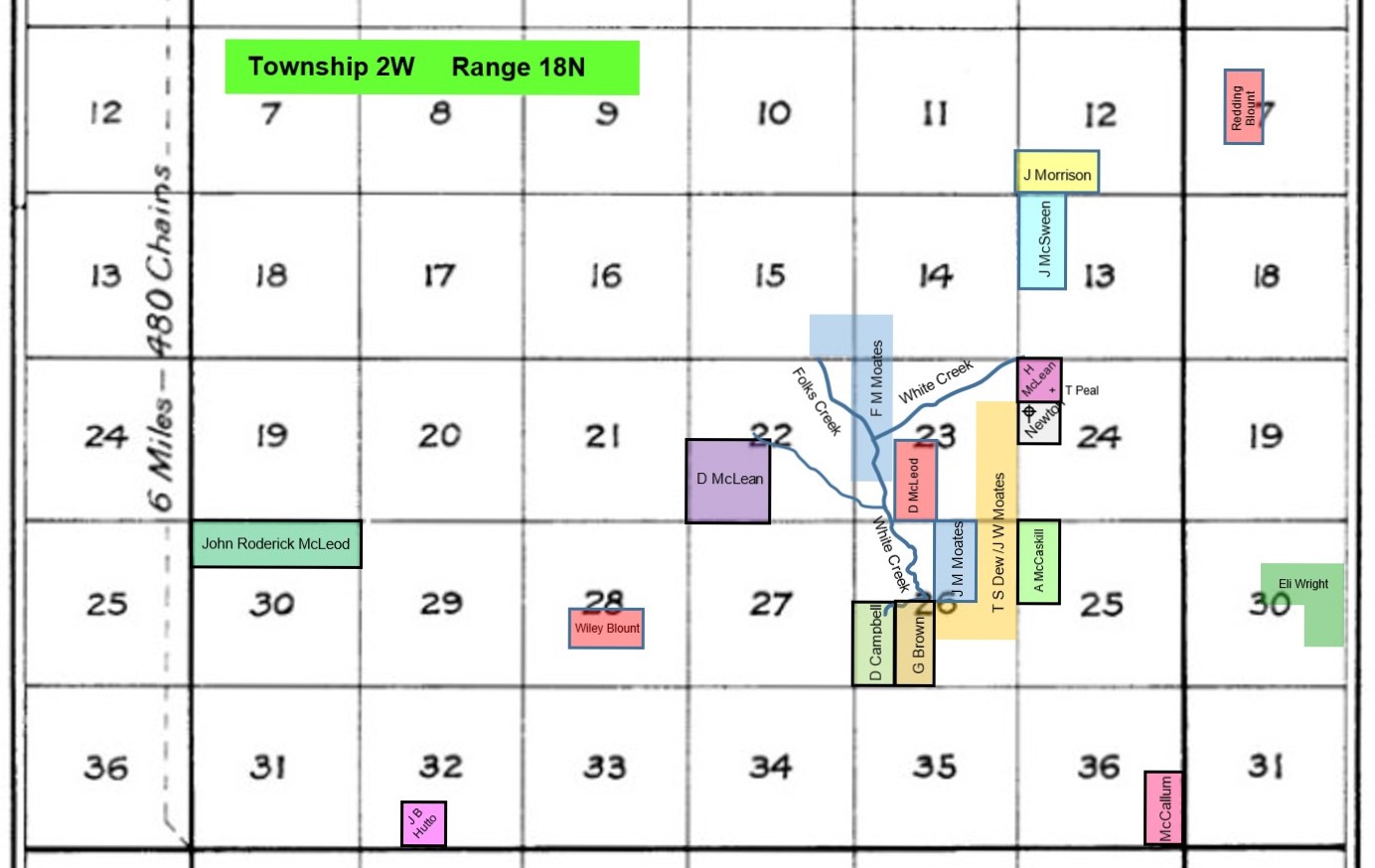
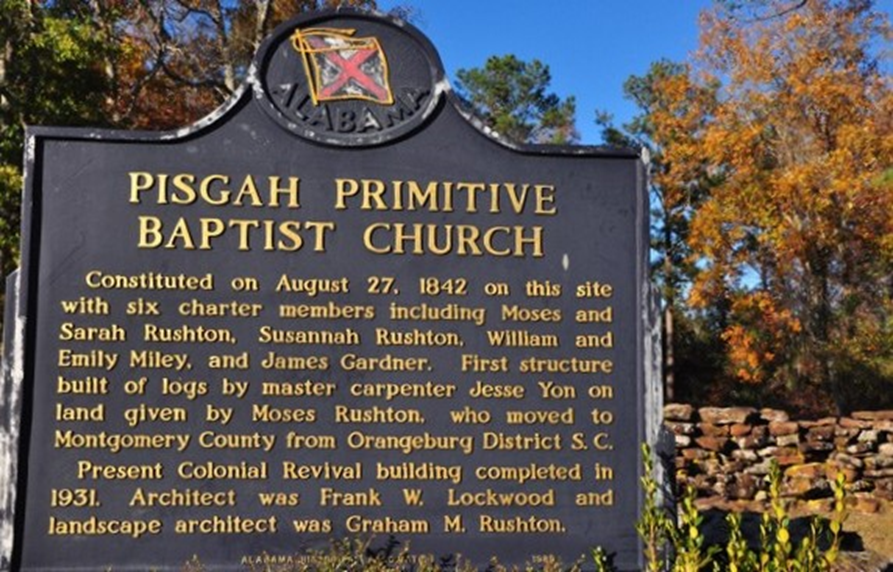
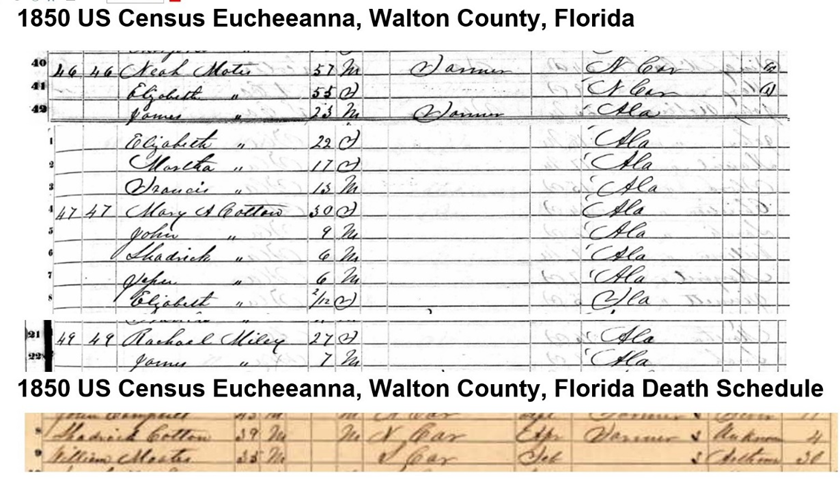
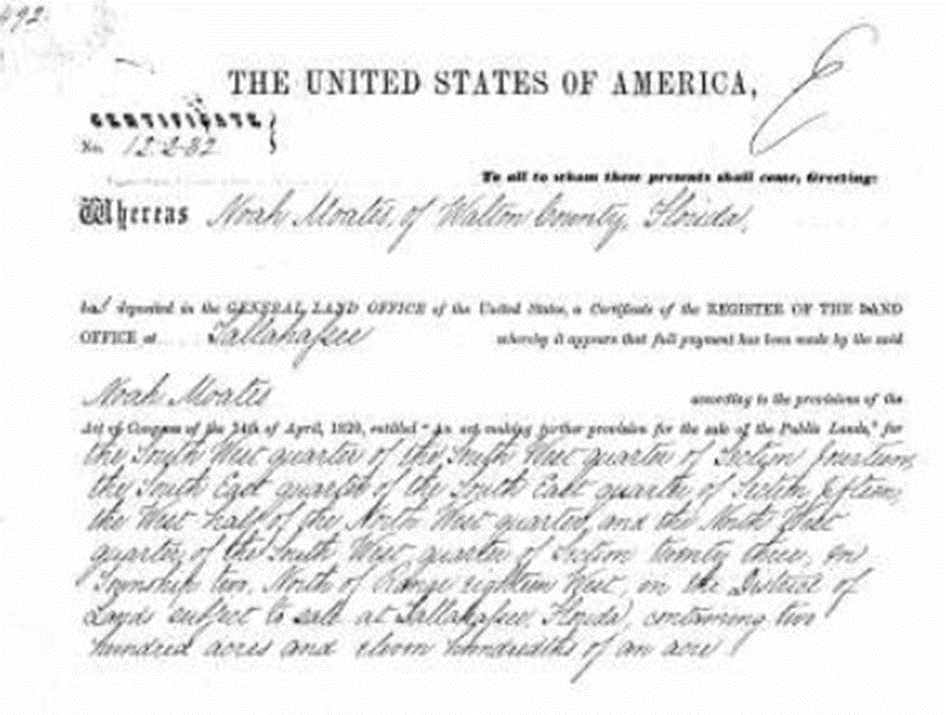
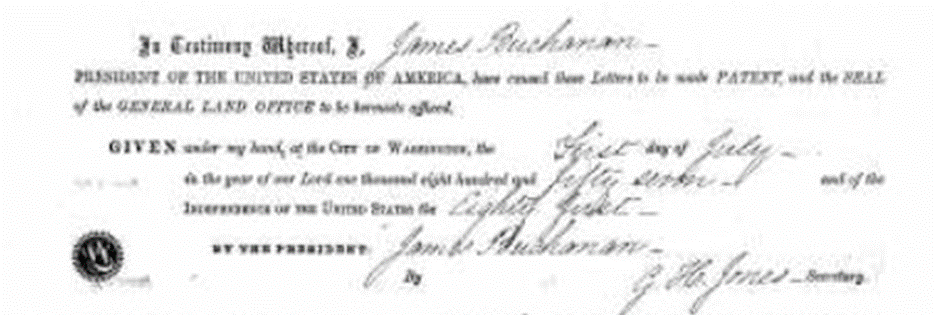

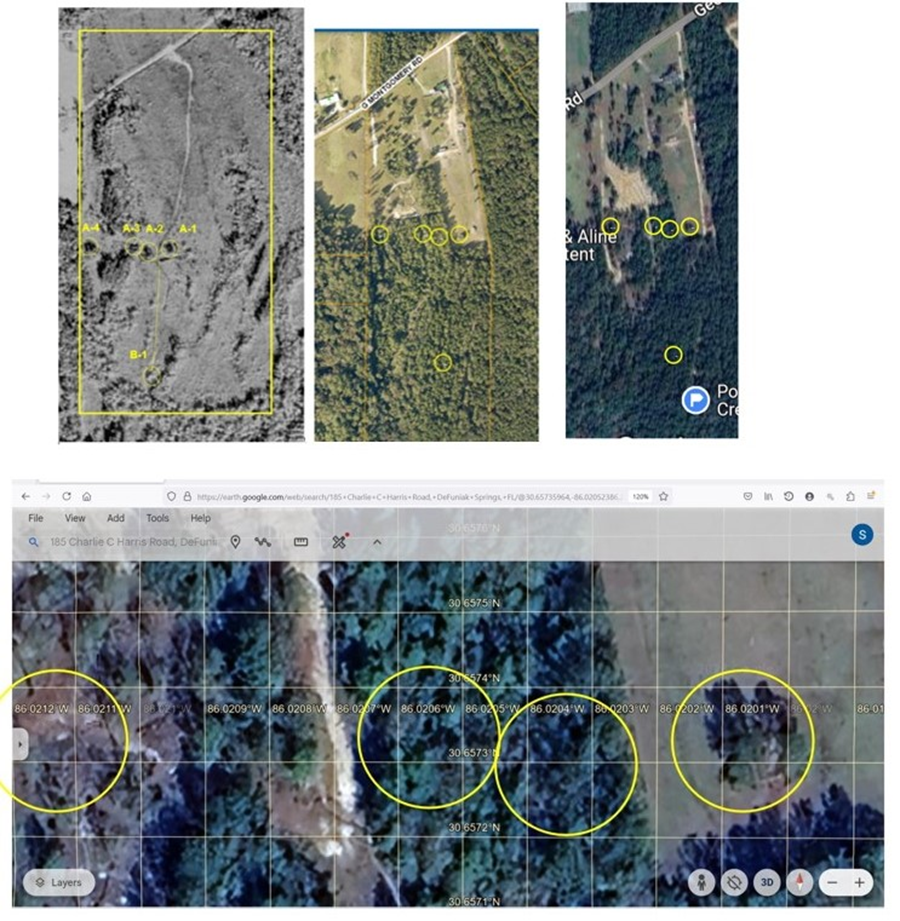
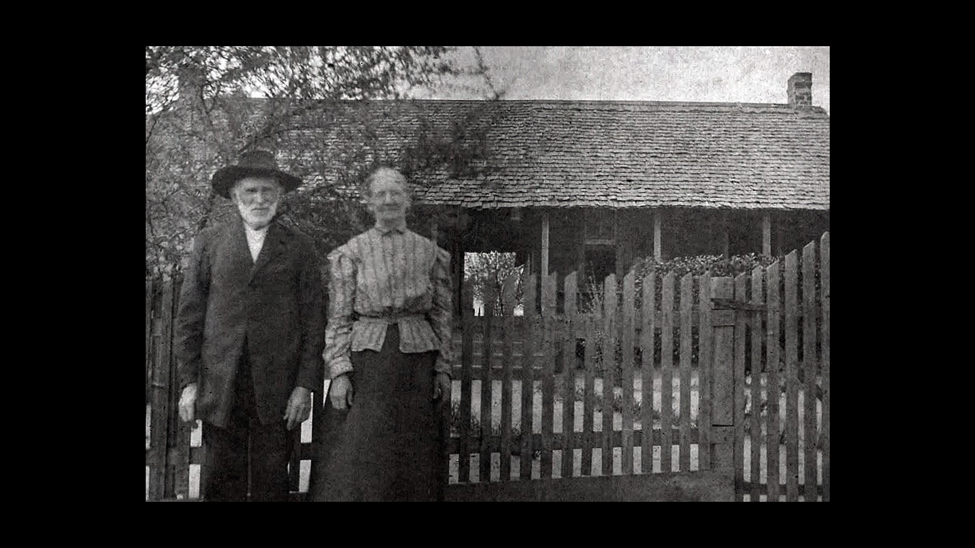
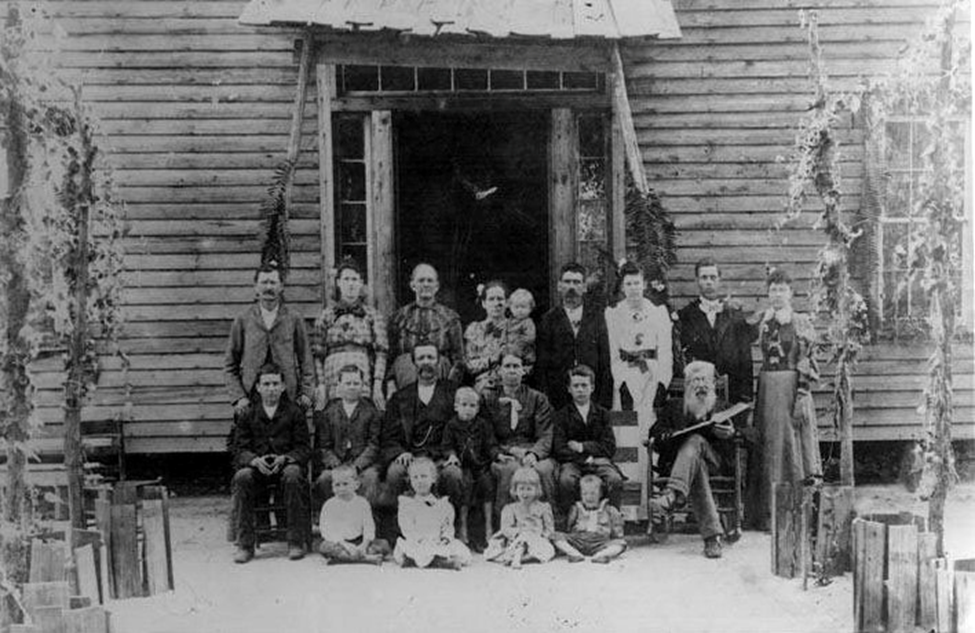
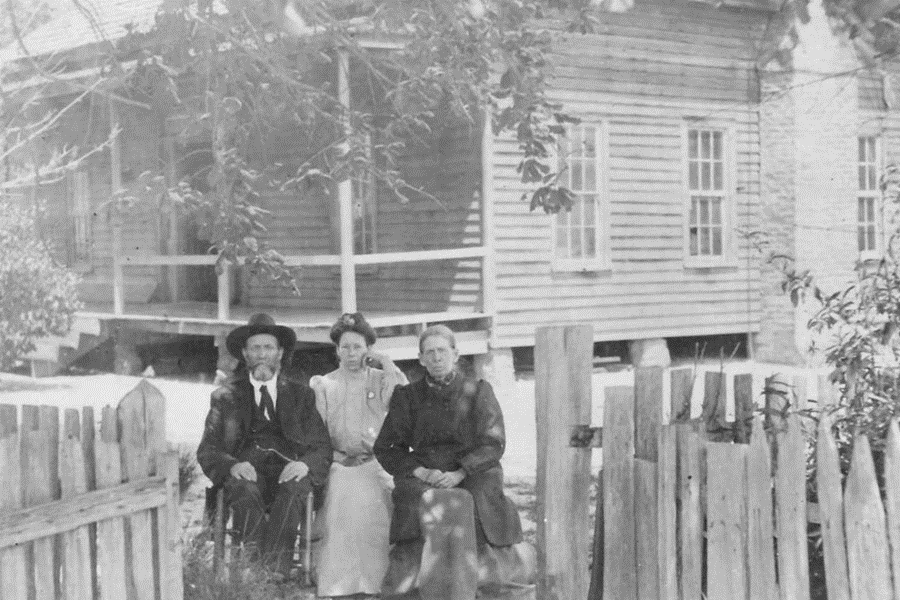
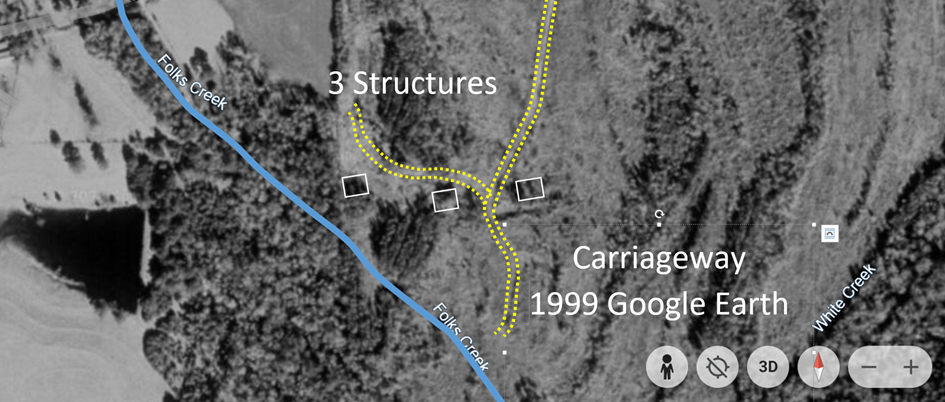
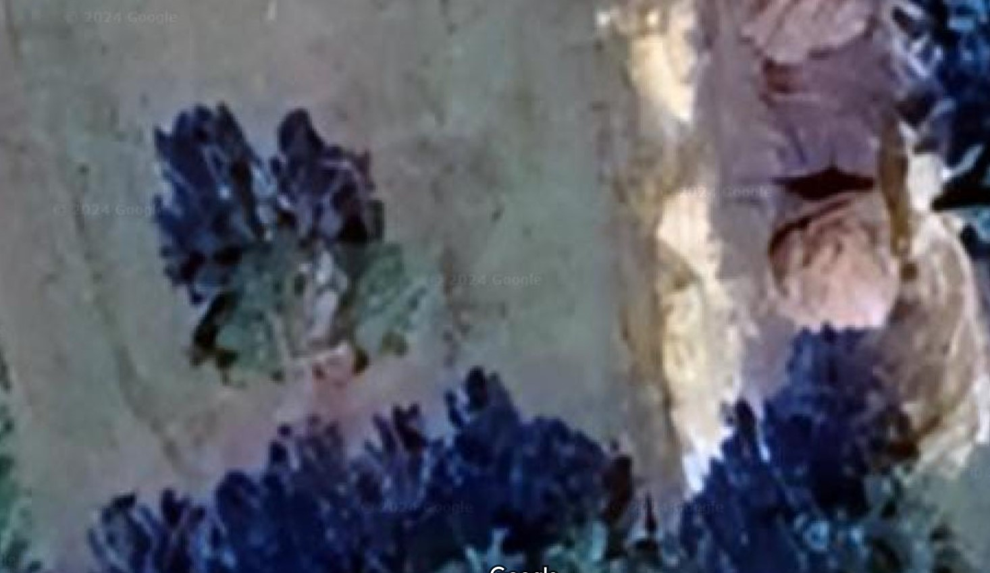
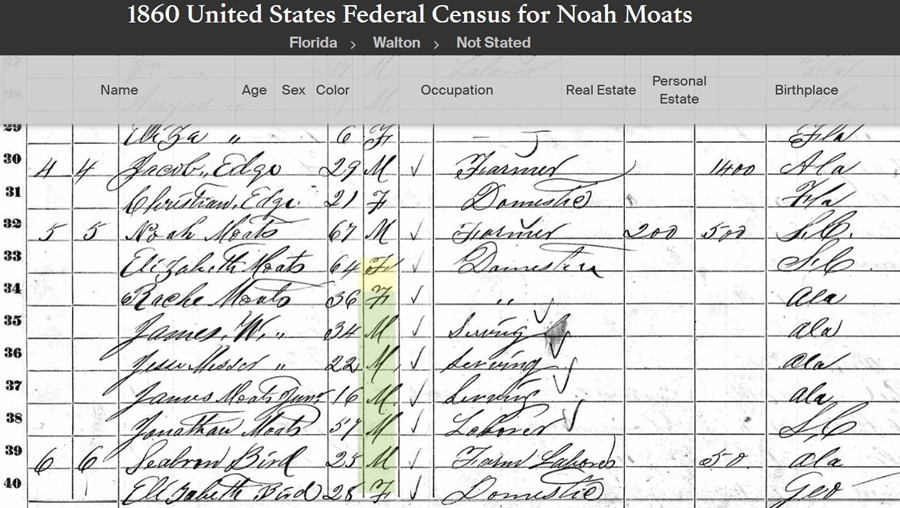
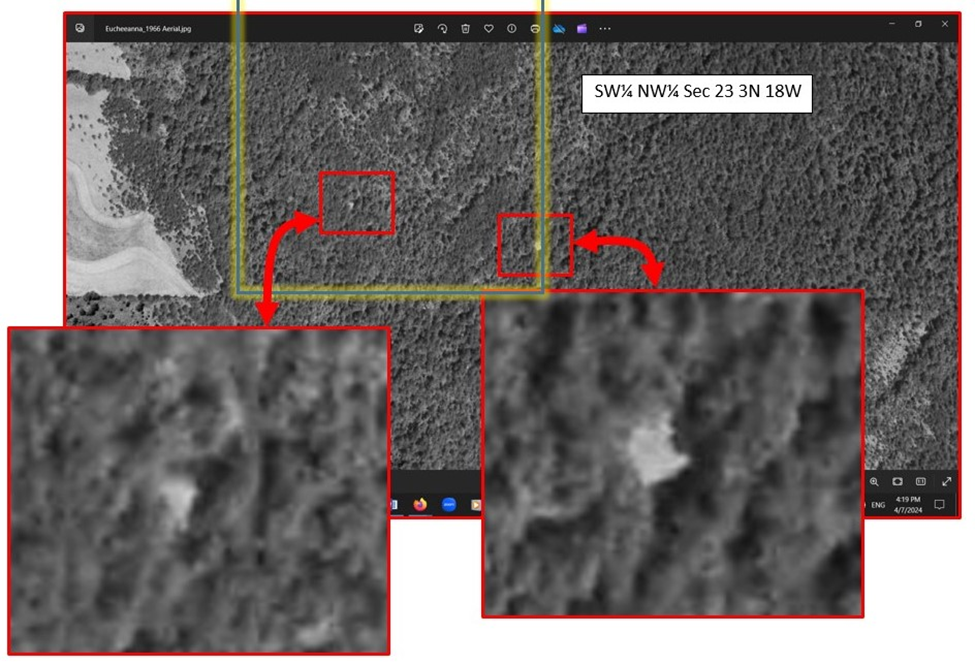
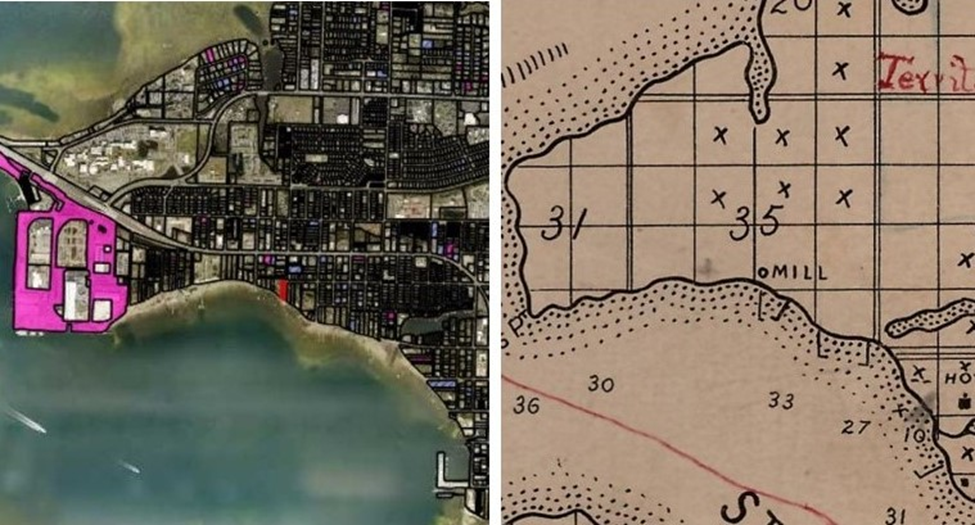
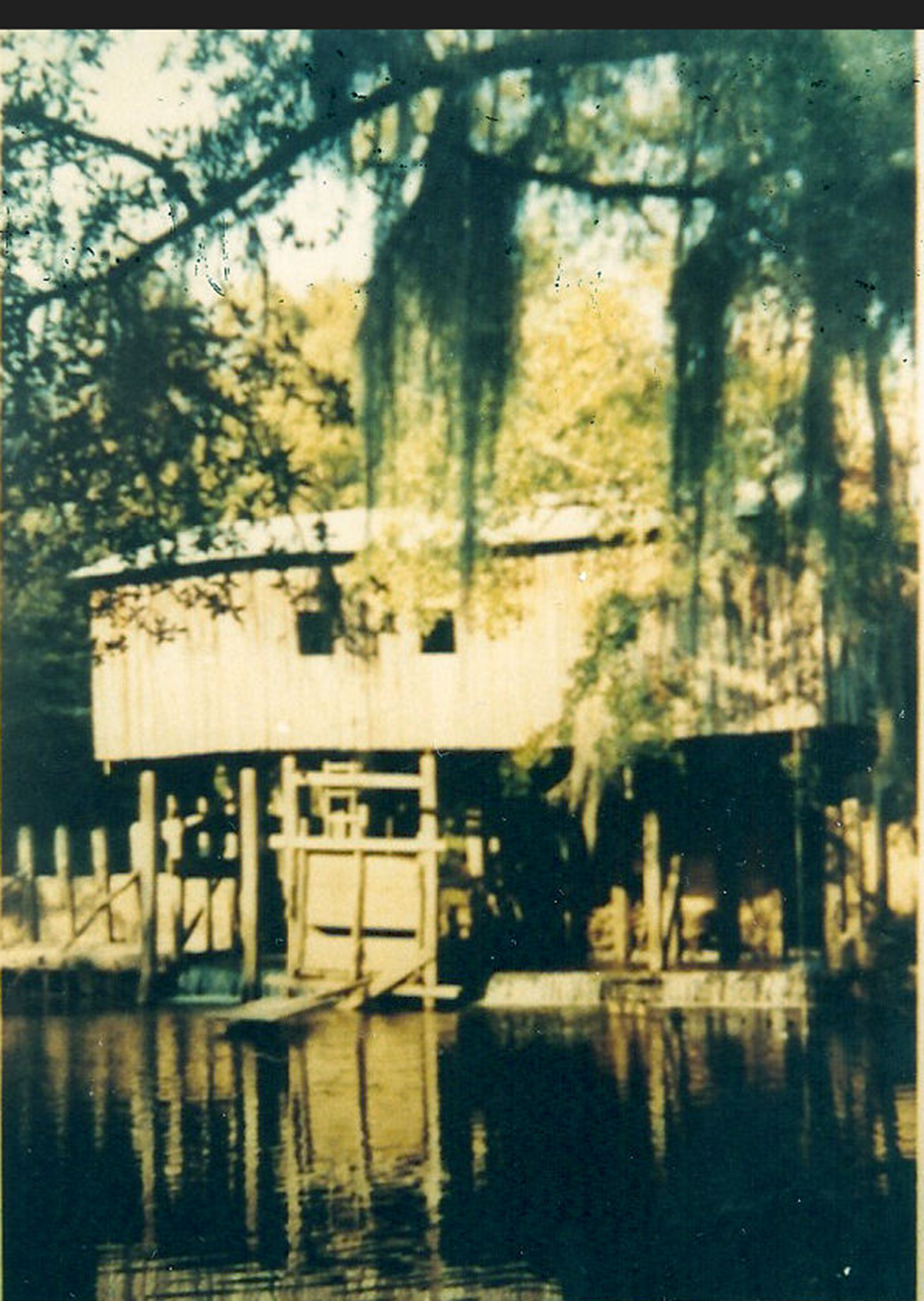

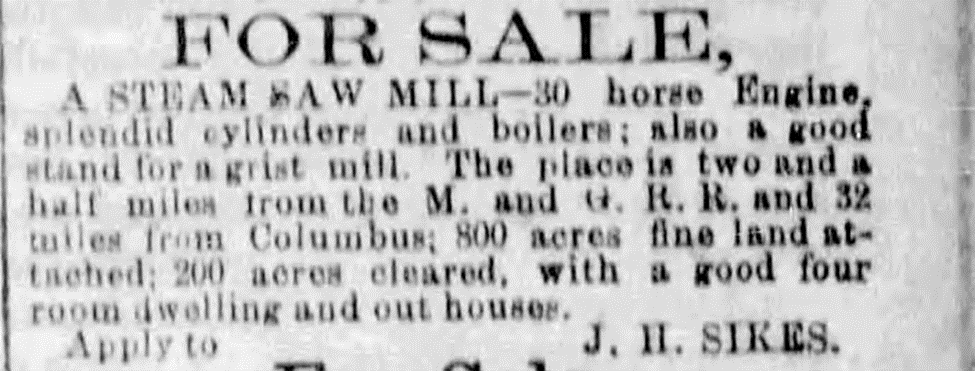
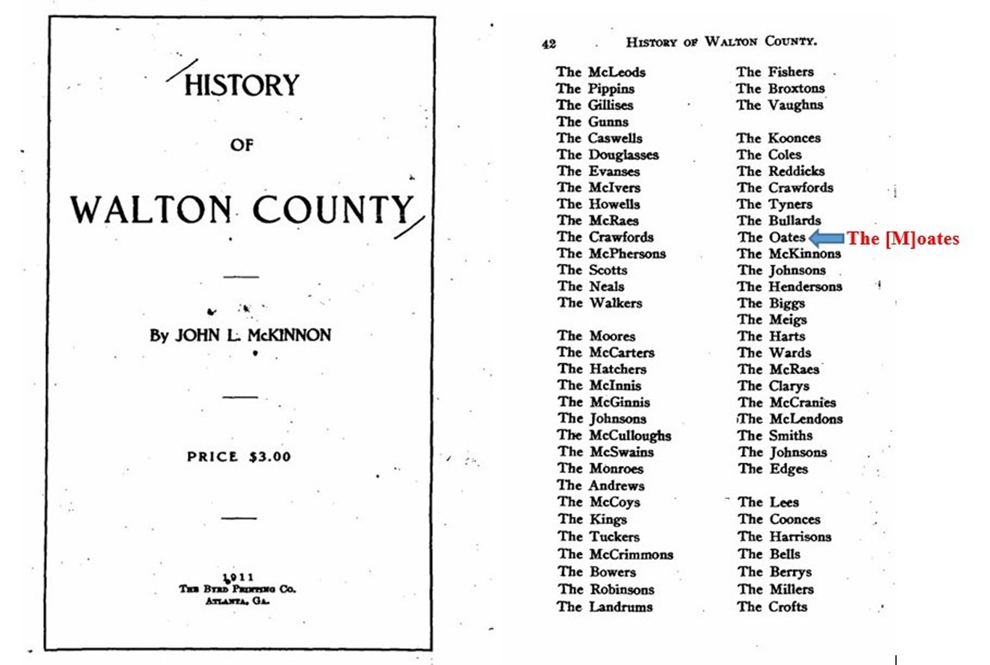
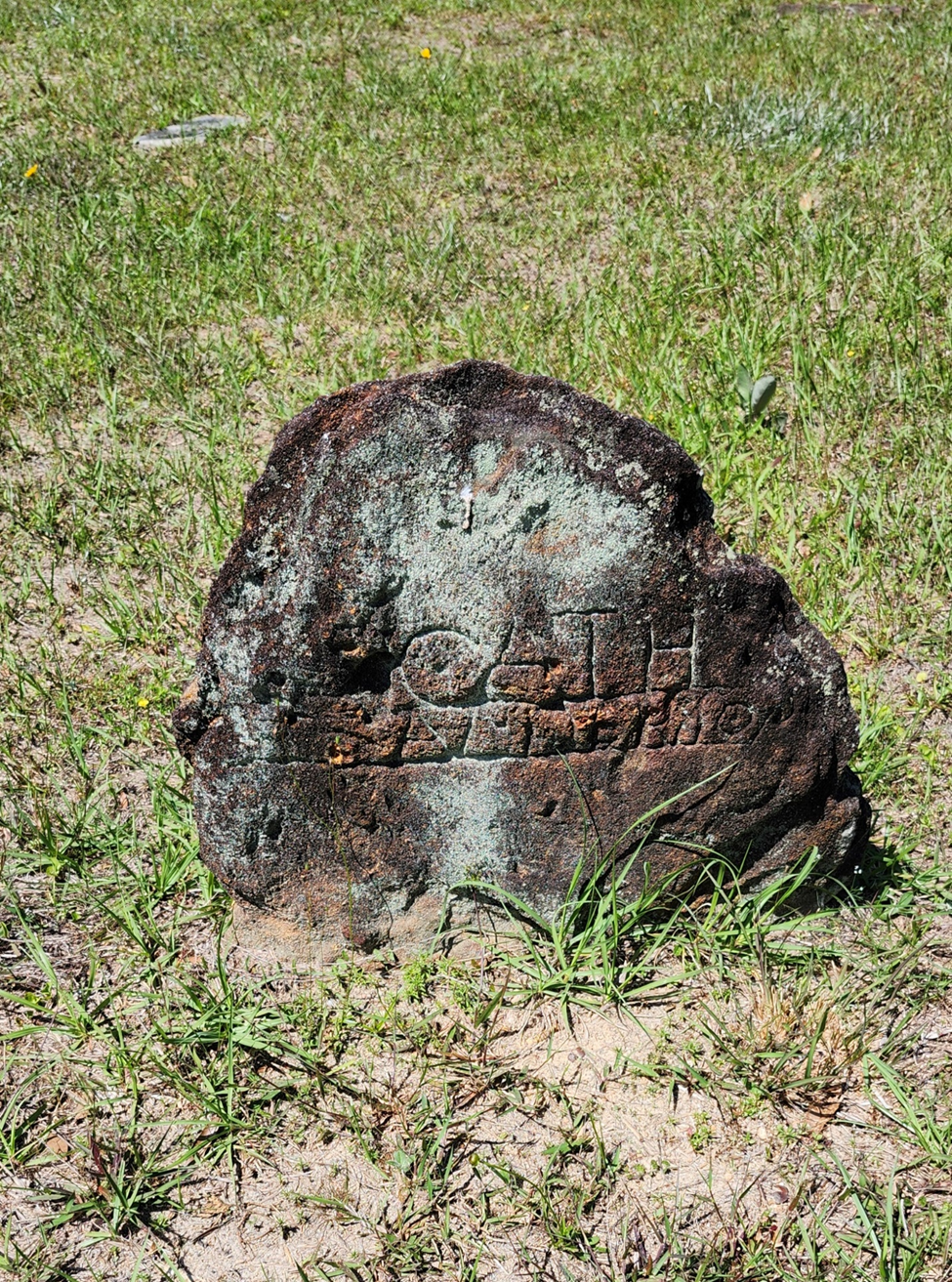
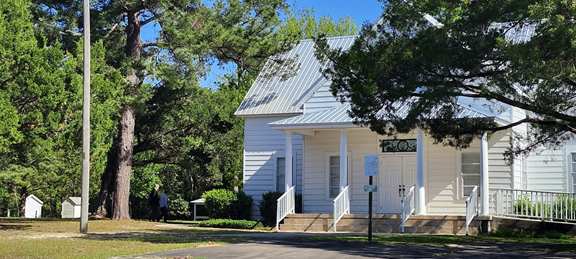


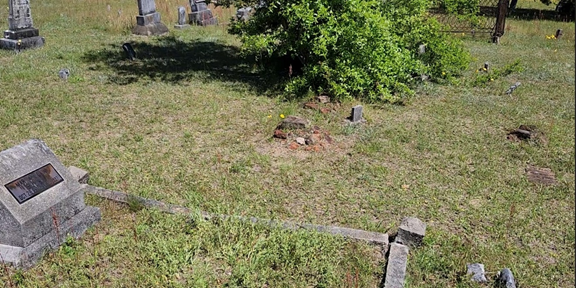
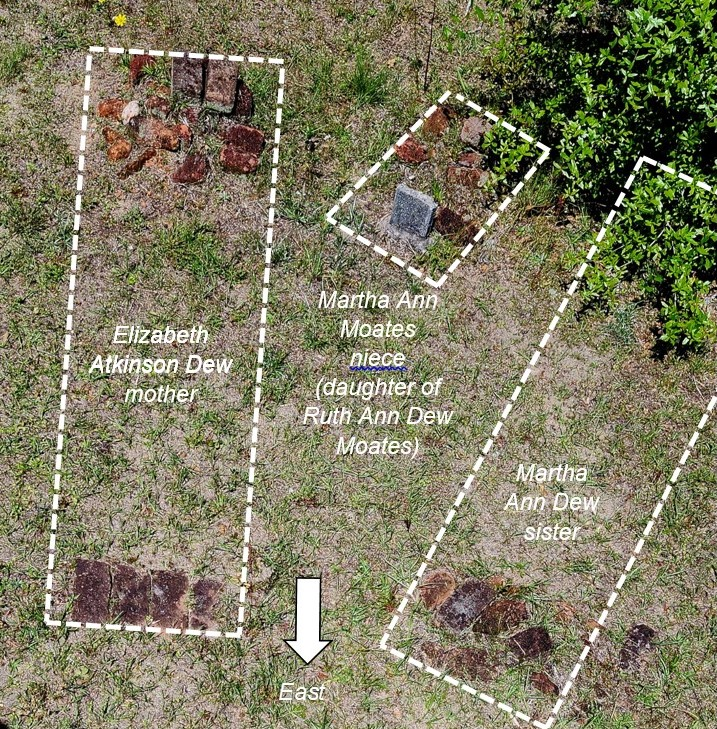

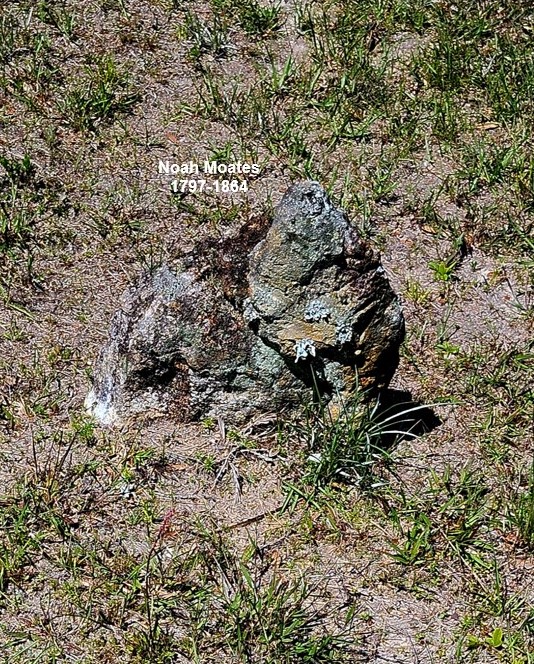


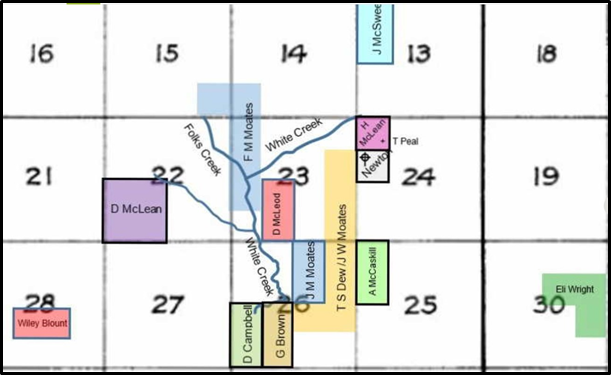


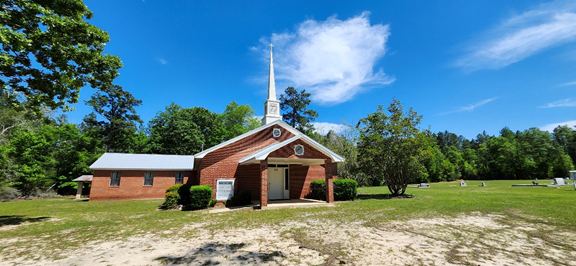


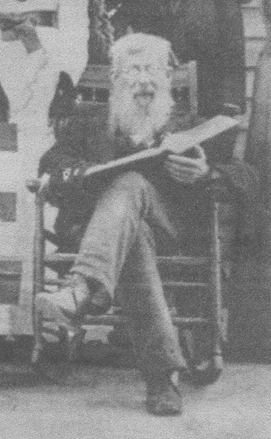
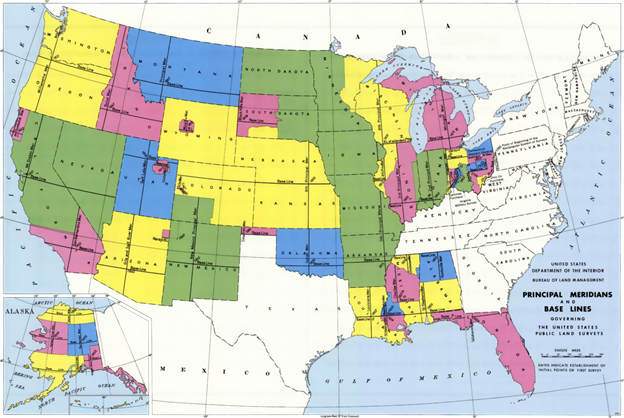


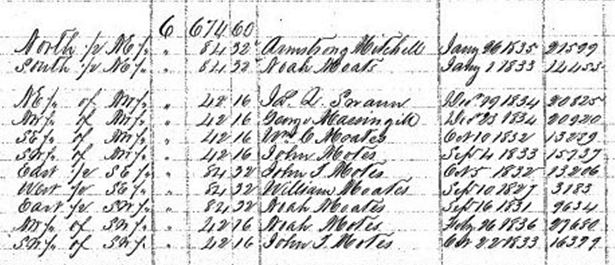


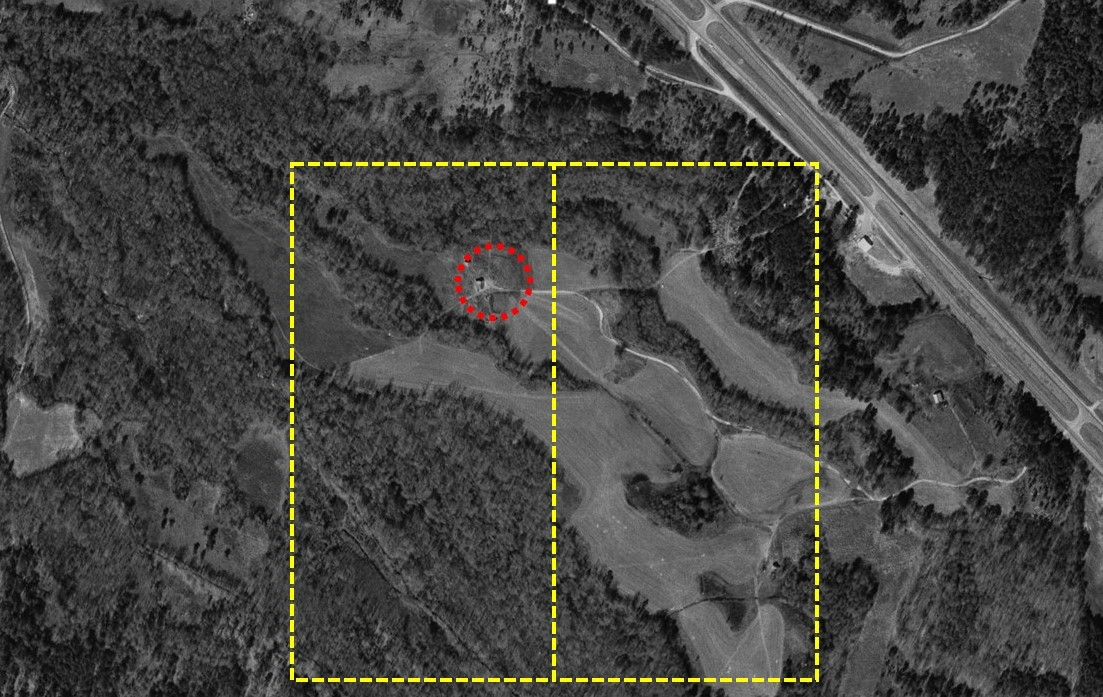
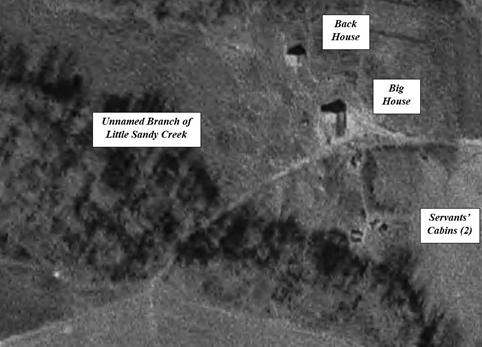

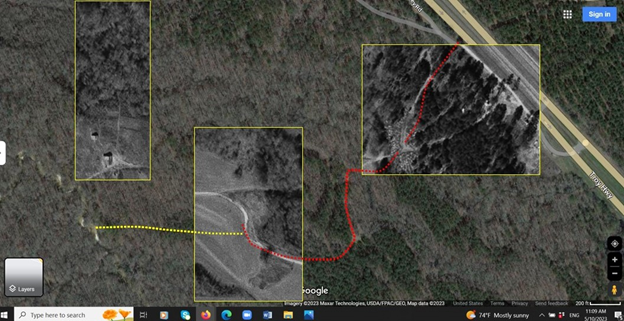

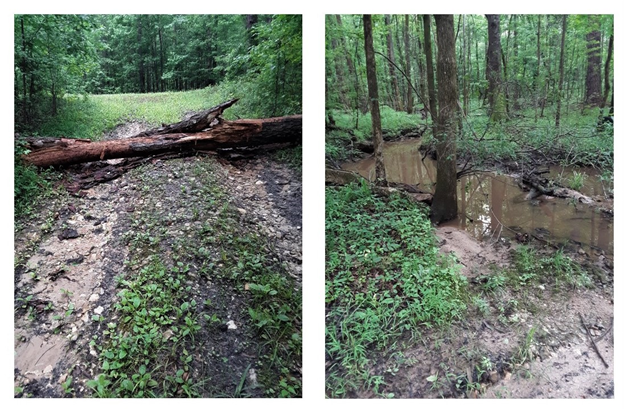


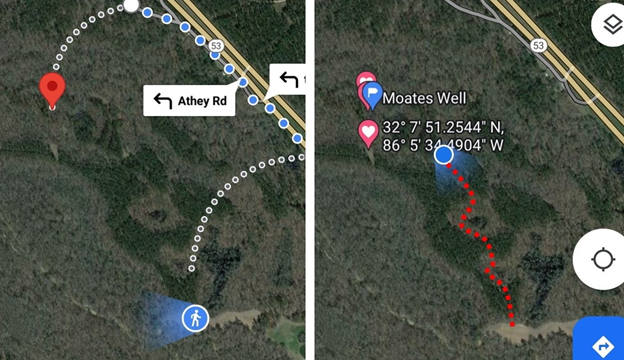

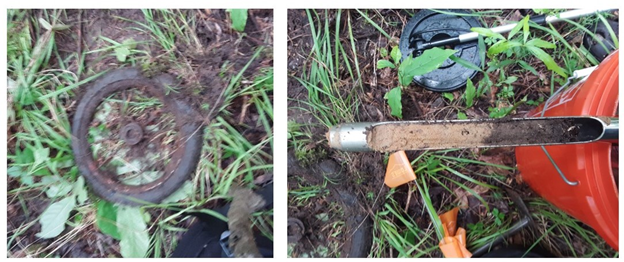


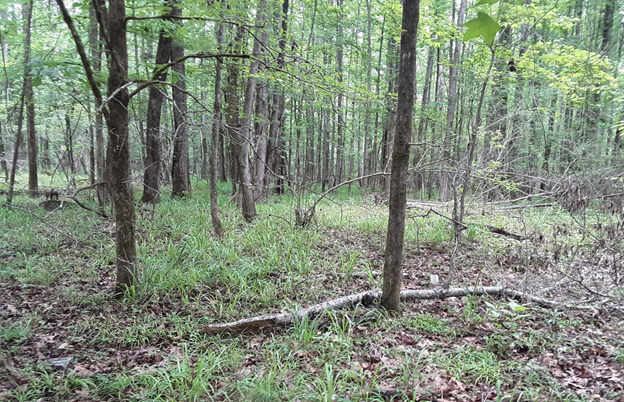
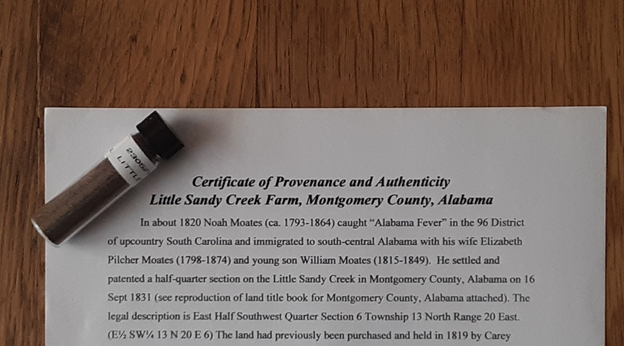
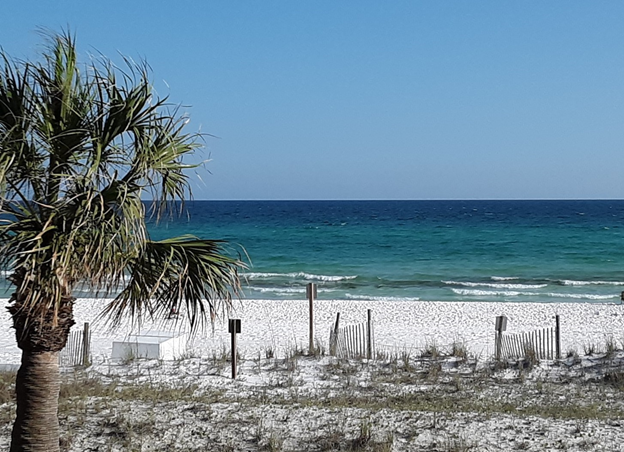


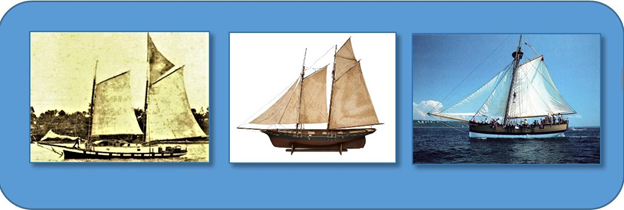


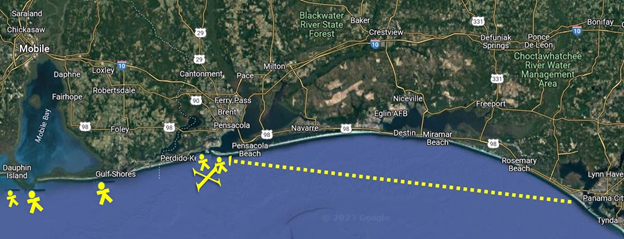


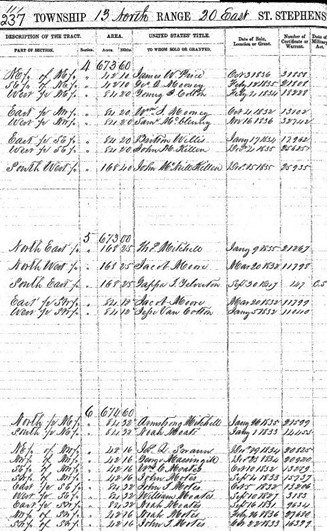
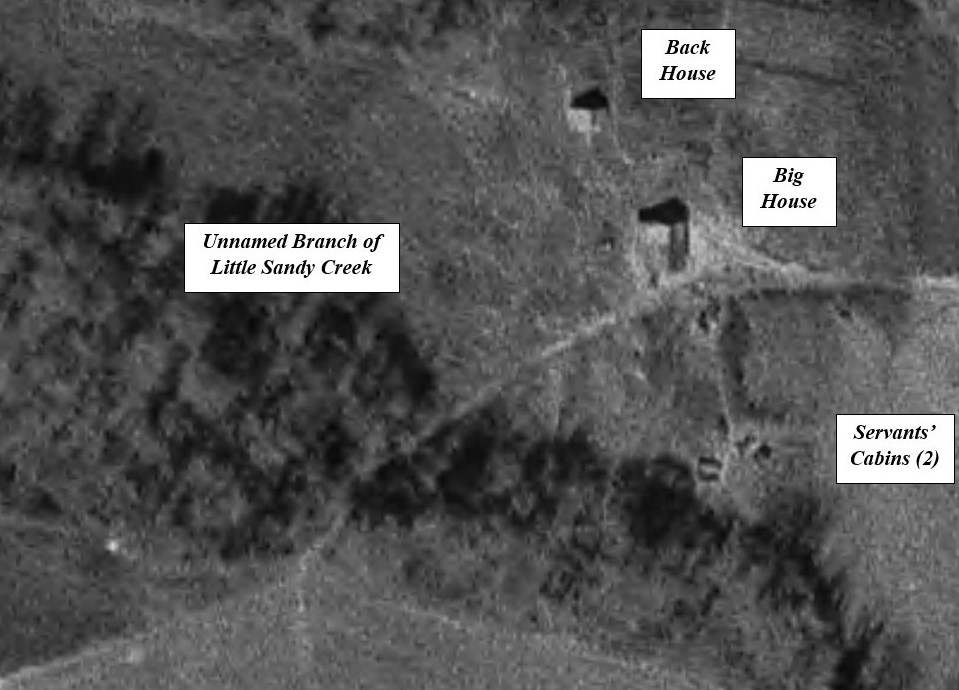


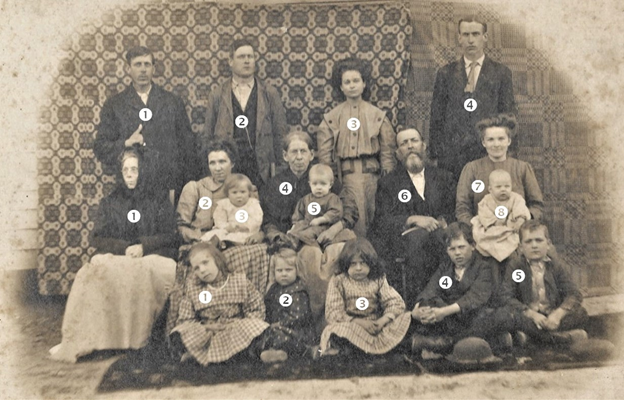


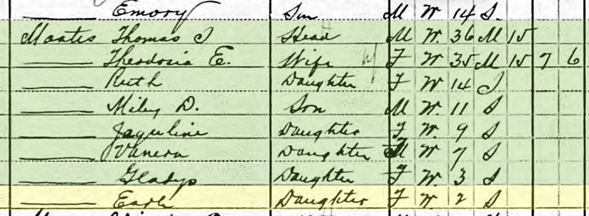


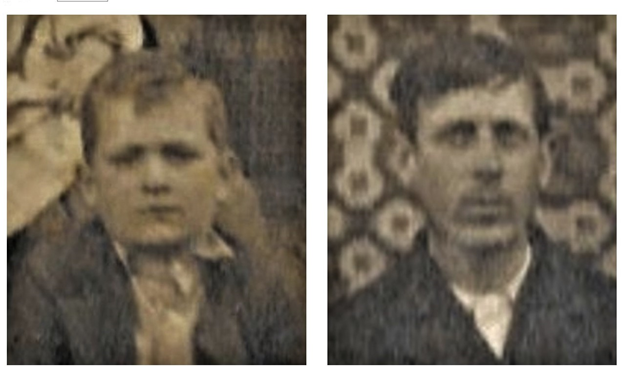
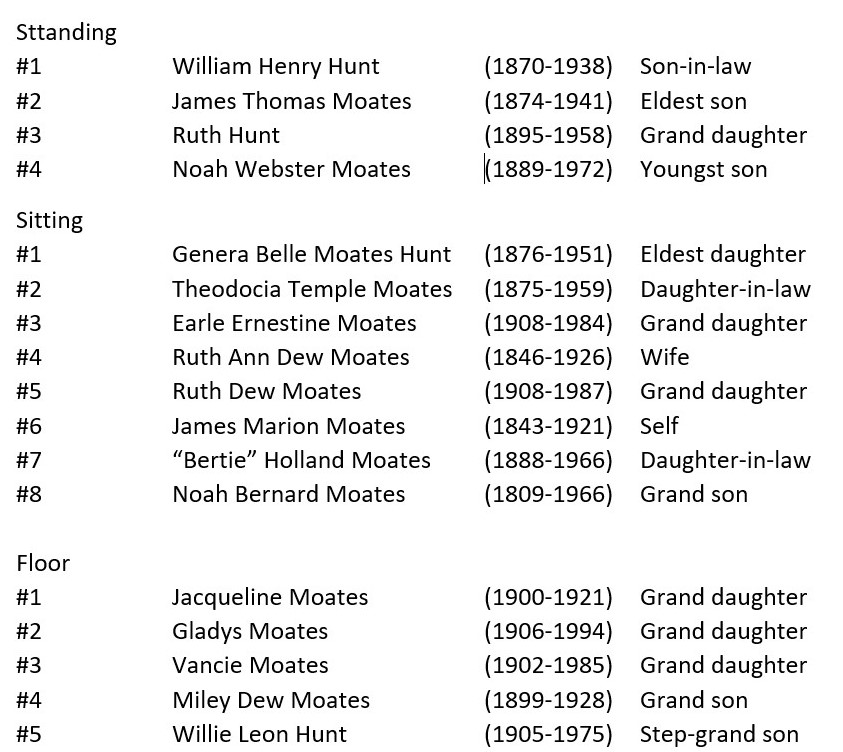






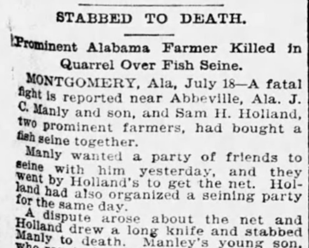


 Sam Matteson